
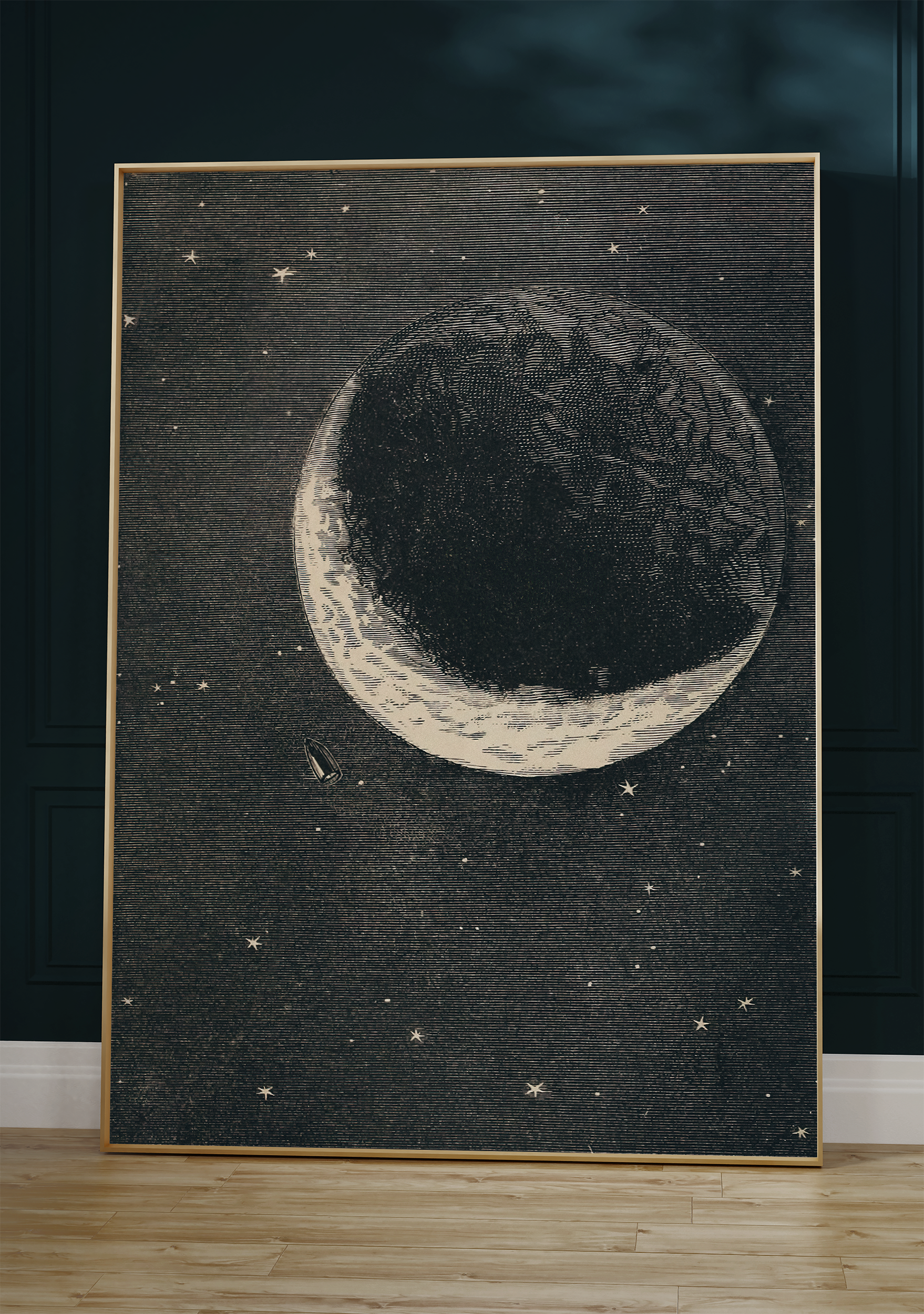
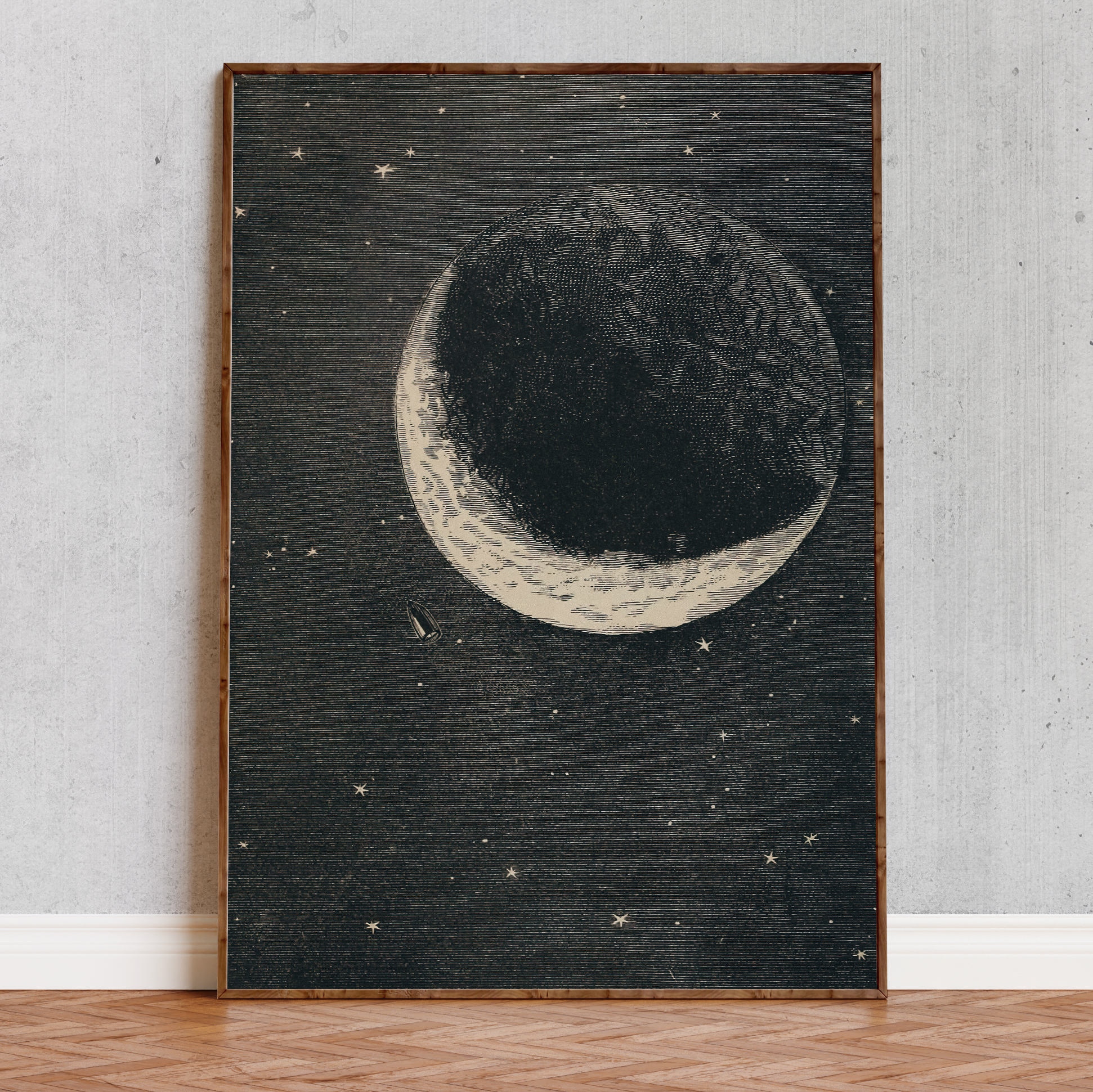
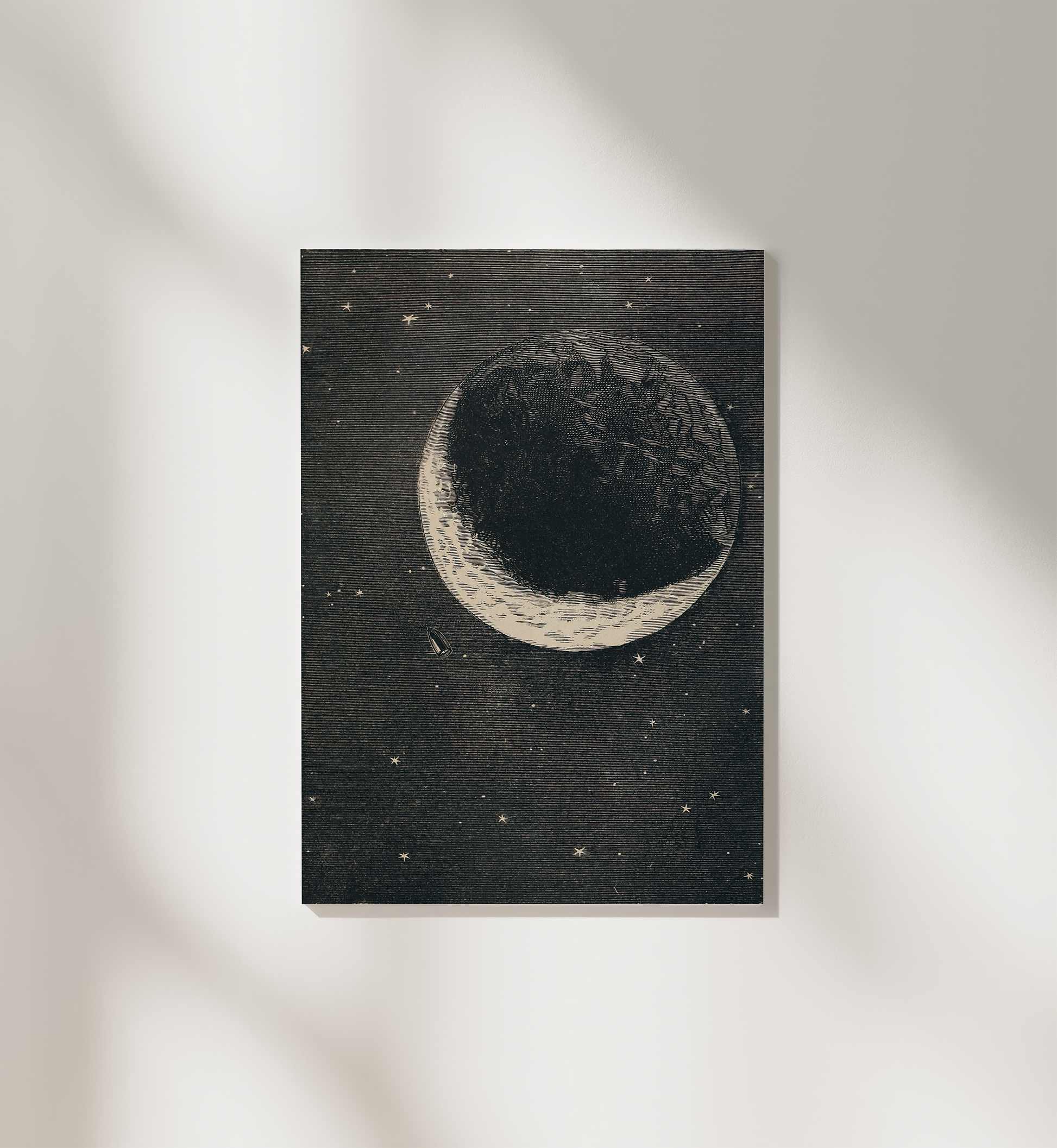
Approaching the Moon, Jules Verne, 1870
Approaching the Moon, Jules Verne, 1870
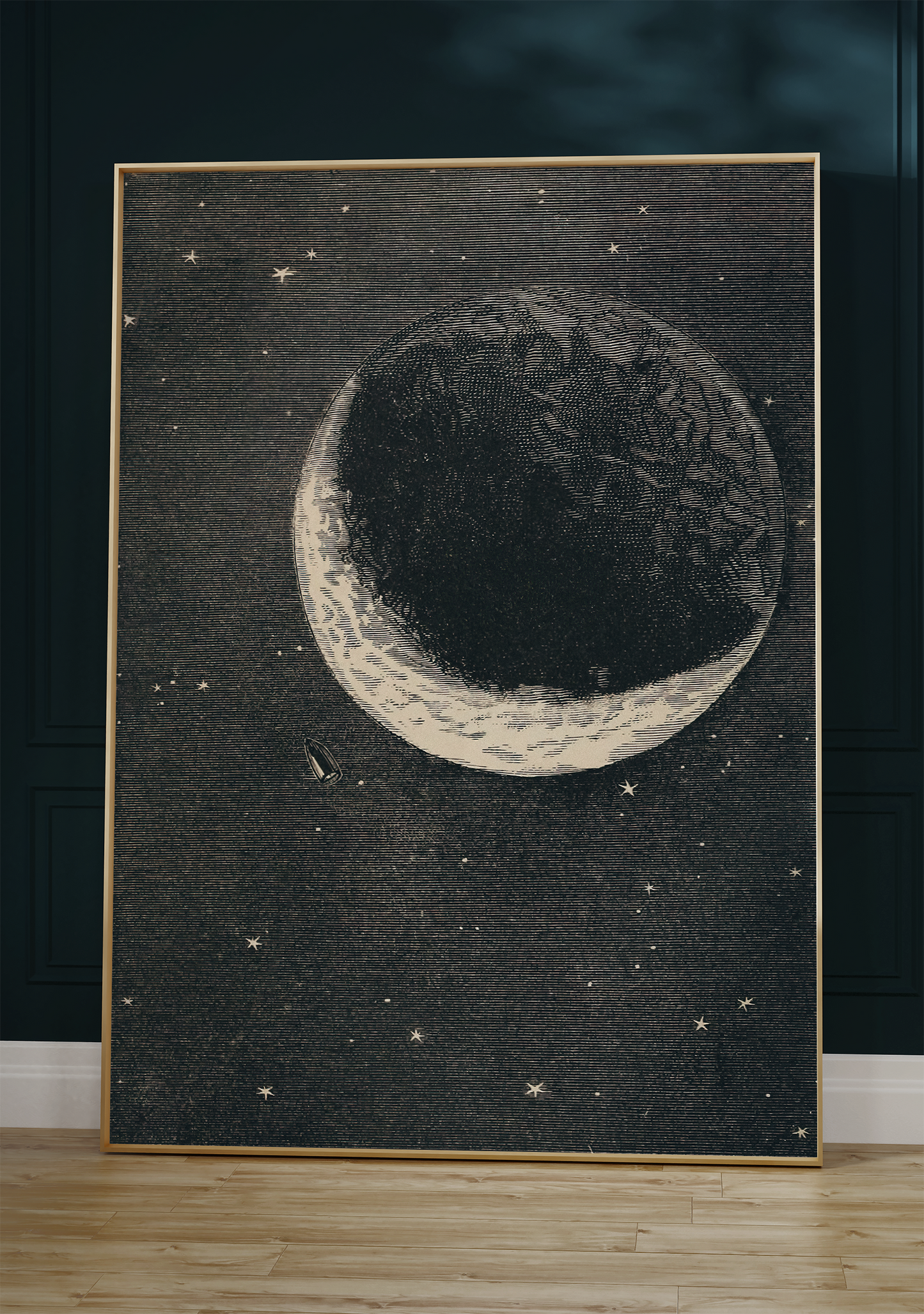
"It was an enormous disc"
For the first time in literature, readers were invited to imagine what the Moon might look like from space.
Couldn't load pickup availability
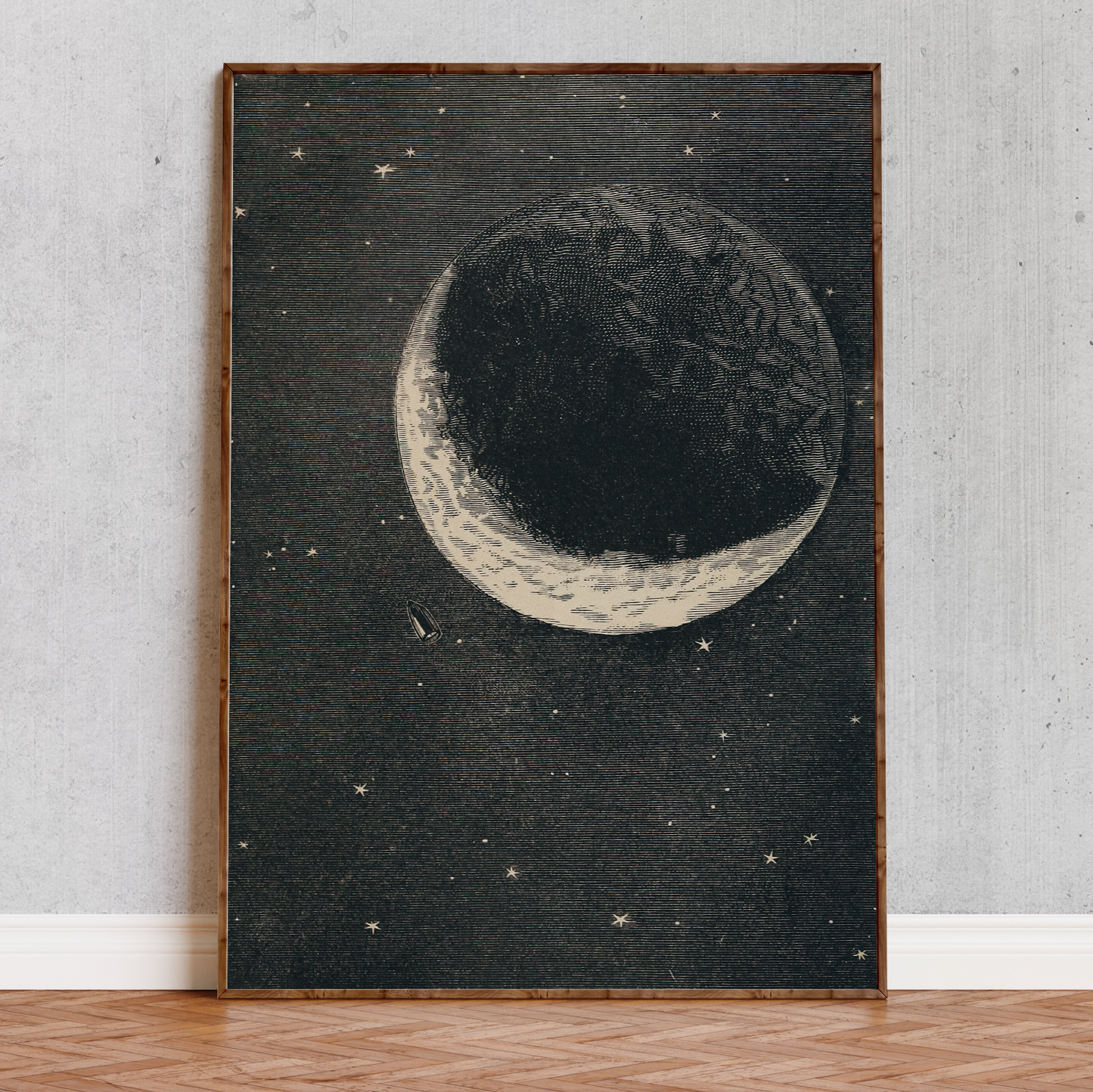
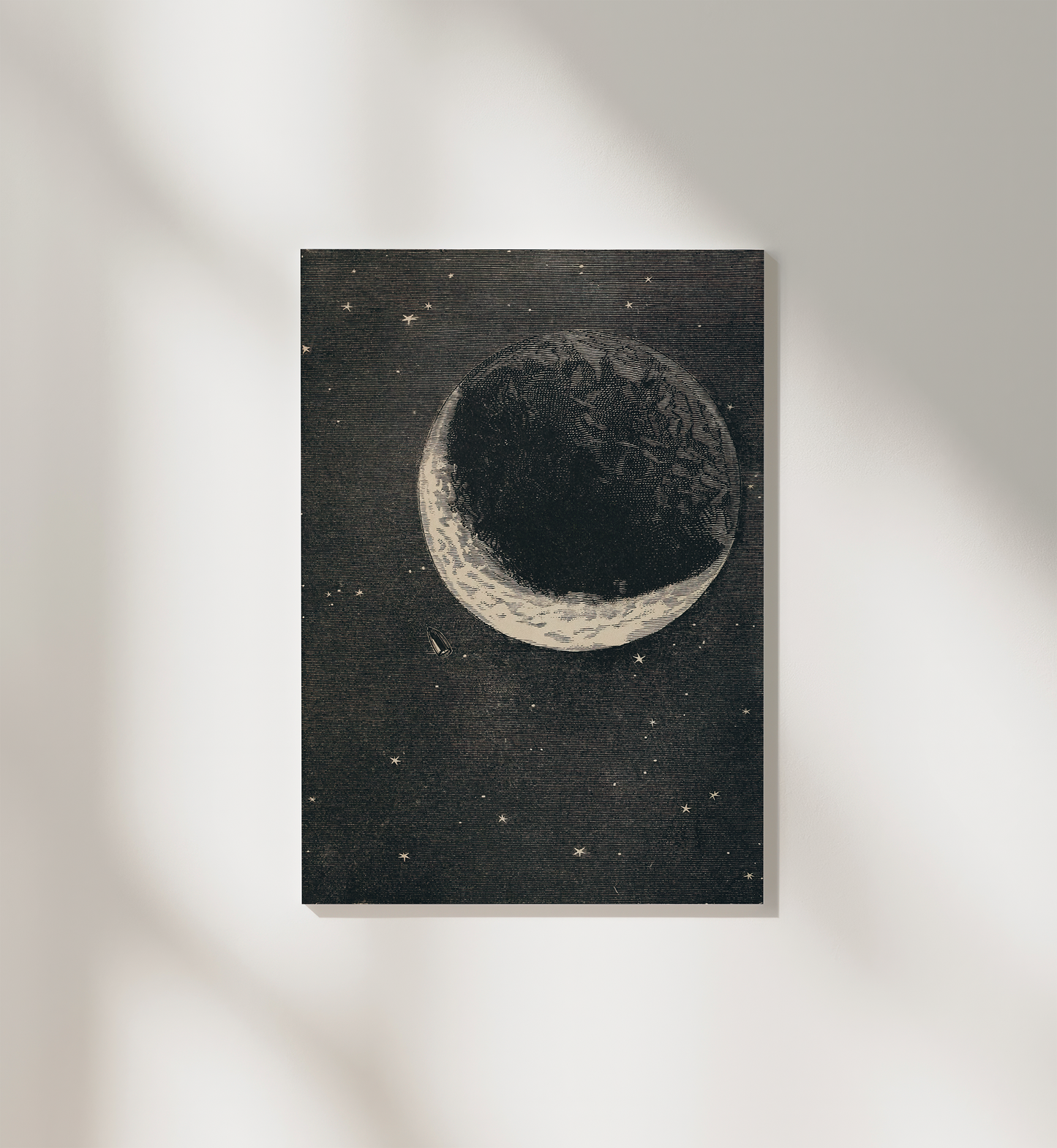
Approaching the Moon was published in 1870 in Jules Verne’s Around the Moon. The illustration depicts one of the first fictional close-up views of another world.
Long before spaceflight became reality, Verne combined scientific knowledge with imagination to create a vision of the Moon that inspired generations of readers, engineers and explorers.
Restored from the original and reproduced as a museum-quality fine art print.
The Story
The Story
When Jules Verne wrote From the Earth to the Moon and its sequel Around the Moon, no one had ever left Earth. Yet his stories were grounded in careful scientific research, calculations and contemporary astronomy rather than pure fantasy.
This illustration captures the moment when the travellers finally approach the Moon. What had always appeared as a distant point of light suddenly becomes a vast landscape, filling the sky with mountains, craters and shadow.
Remarkably, many aspects of Verne’s imagined mission proved surprisingly close to reality. A century later, engineers involved in the Apollo programme acknowledged the influence of his work, whose launch concept, trajectory and splashdown shared striking similarities with the first journeys to the Moon.
Today, the image stands as a remarkable meeting point between literature, science and imagination.
Editor’s note
Editor’s note
I chose this print because it captures a feeling that photographs cannot.
It isn’t a record of what the Moon looked like. It’s a record of what people imagined it might feel like to see it for the first time.
To me, that’s one of the most beautiful things about Jules Verne. His stories didn’t simply predict the future. They expanded it.
Restoration
Restoration
This image has been carefully prepared for fine art printing.
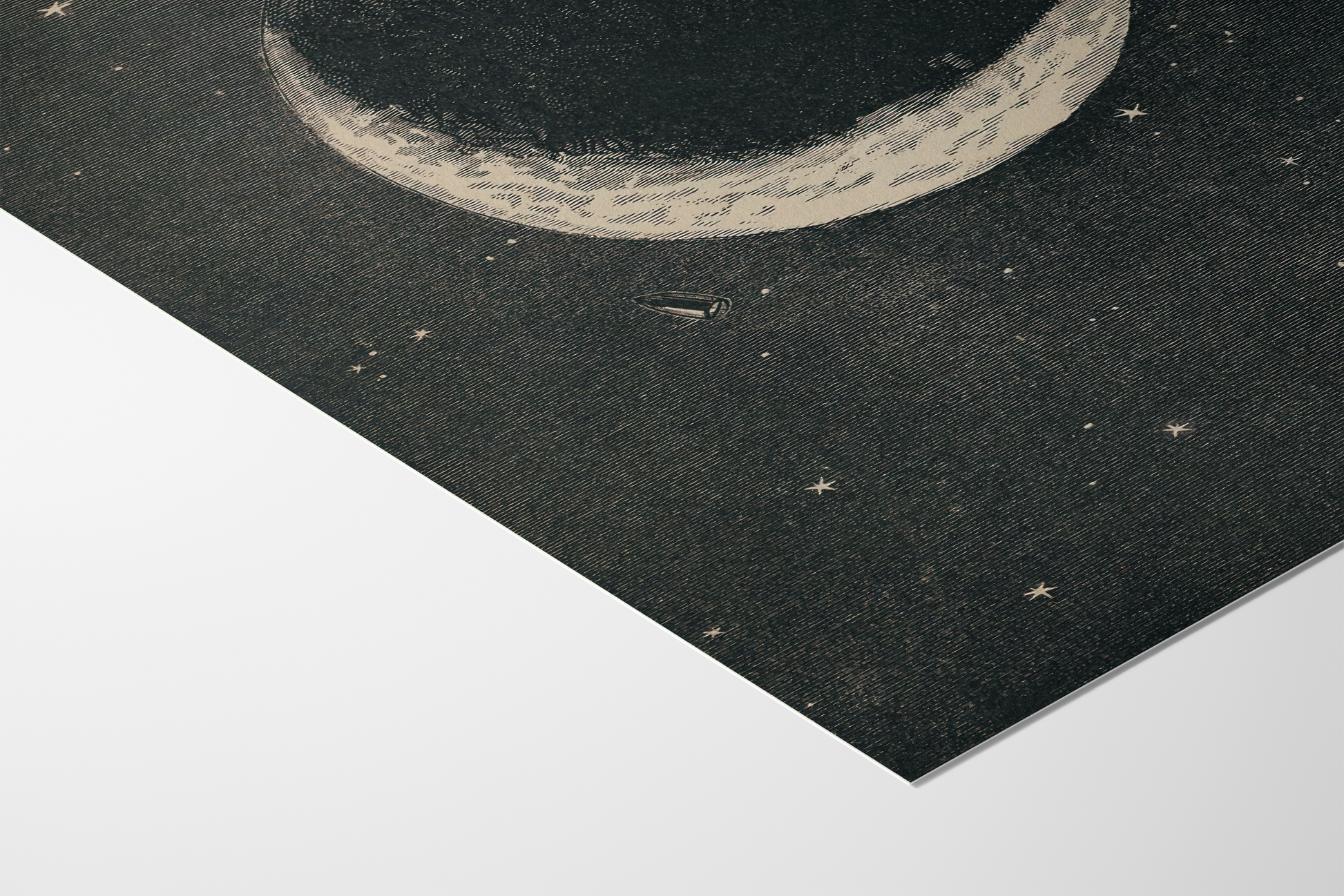
Dust, stains, scanning artifacts, and tonal inconsistencies are corrected by hand where needed. The file is then checked for sharpness, tonal range, and print quality.
The goal is not to redesign the original, but to preserve its character while making it suitable for contemporary printing.
Materials
Materials
Printed on Hahnemühle 308 gsm museum-quality fine art paper with a matte finish, or available as a premium 400 gsm canvas mounted in a handcrafted wooden float frame.
Paper prints are shipped unframed and wrapped in acid-free tissue paper.
Shipping
Shipping
All the artwork is printed to order in as little as 2-3 days. We ship everything for free worldwide.
Share

Our artwork is printed on Hahnemühle Fine-Art 308 gsm paper, founded in Germany in 1584 Hahnemühle makes one of the best fine-art paper available today.