


Double Stars and Clusters, 1856
Double Stars and Clusters, 1856
The night sky is not just made of stars.
Beyond the familiar constellations lies a universe of double stars, clusters and nebulae that transformed the way astronomers understood the heavens.
Couldn't load pickup availability
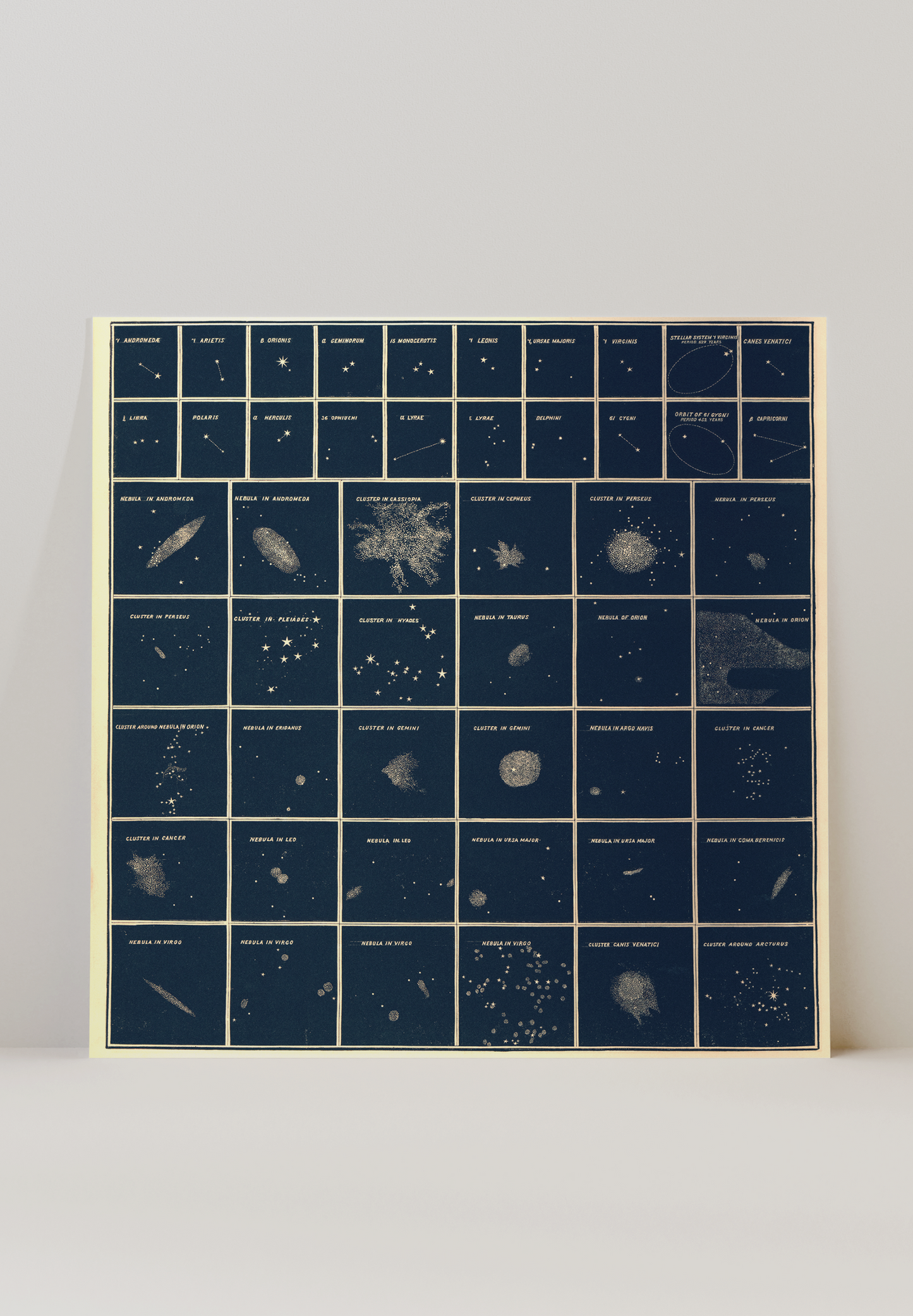
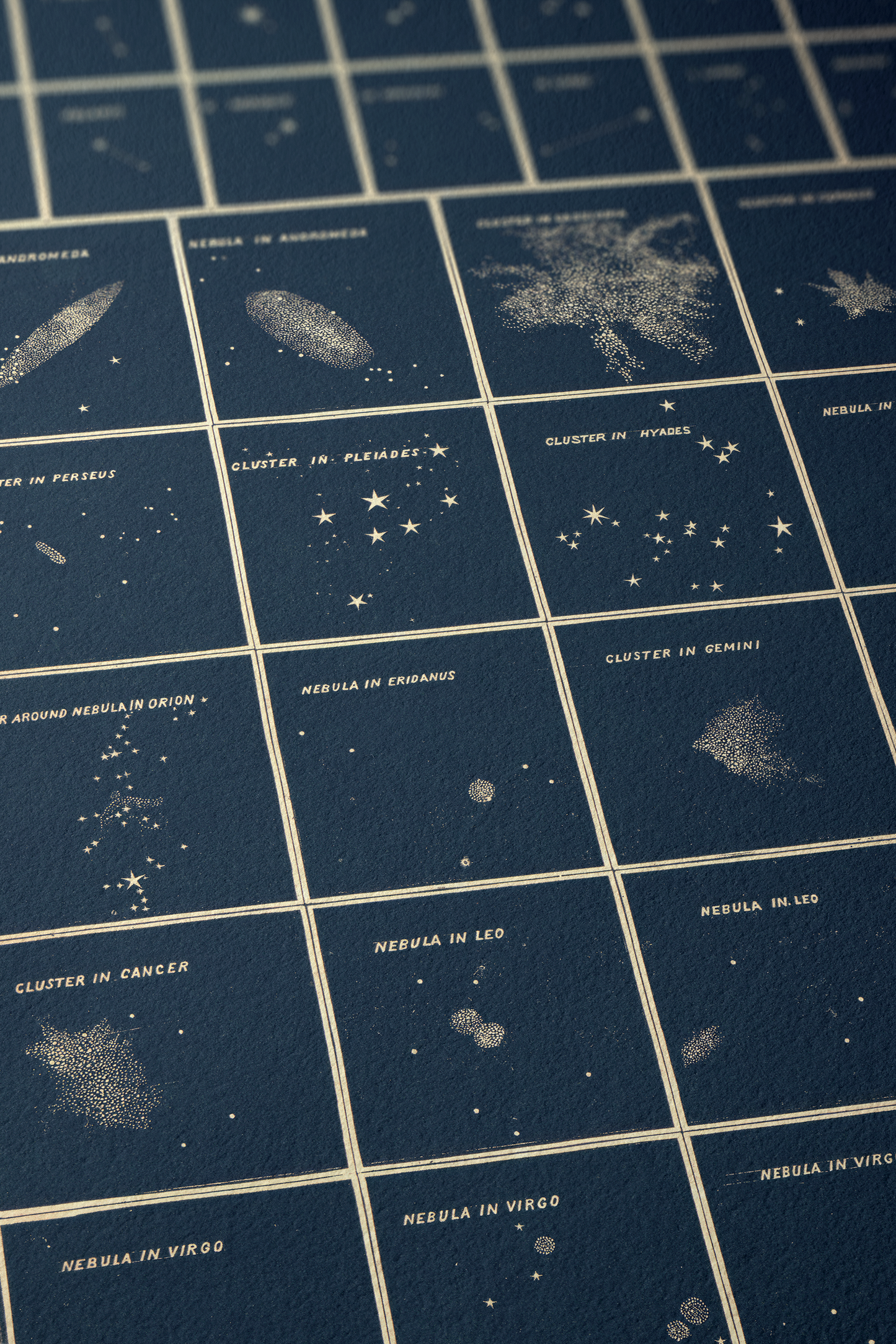
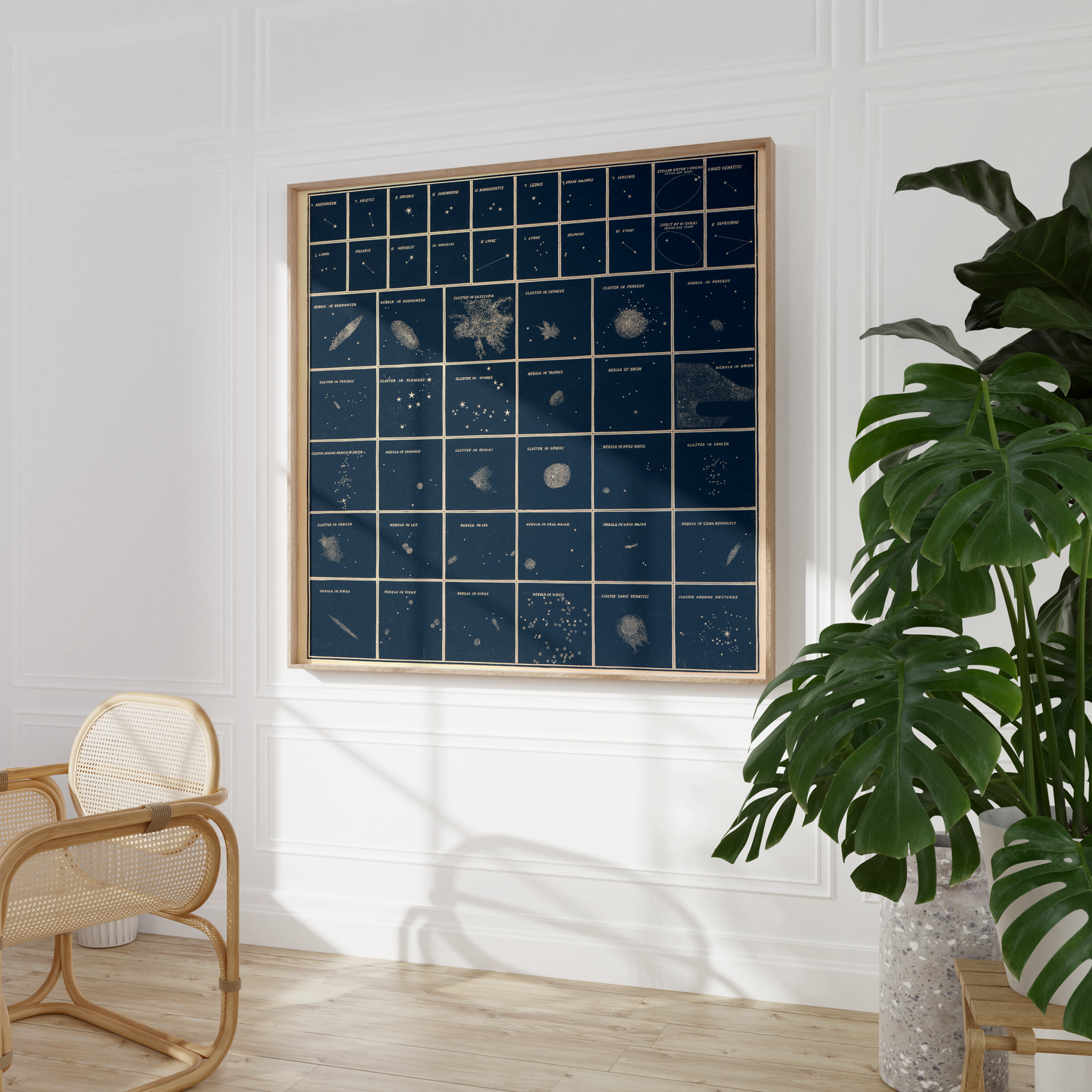
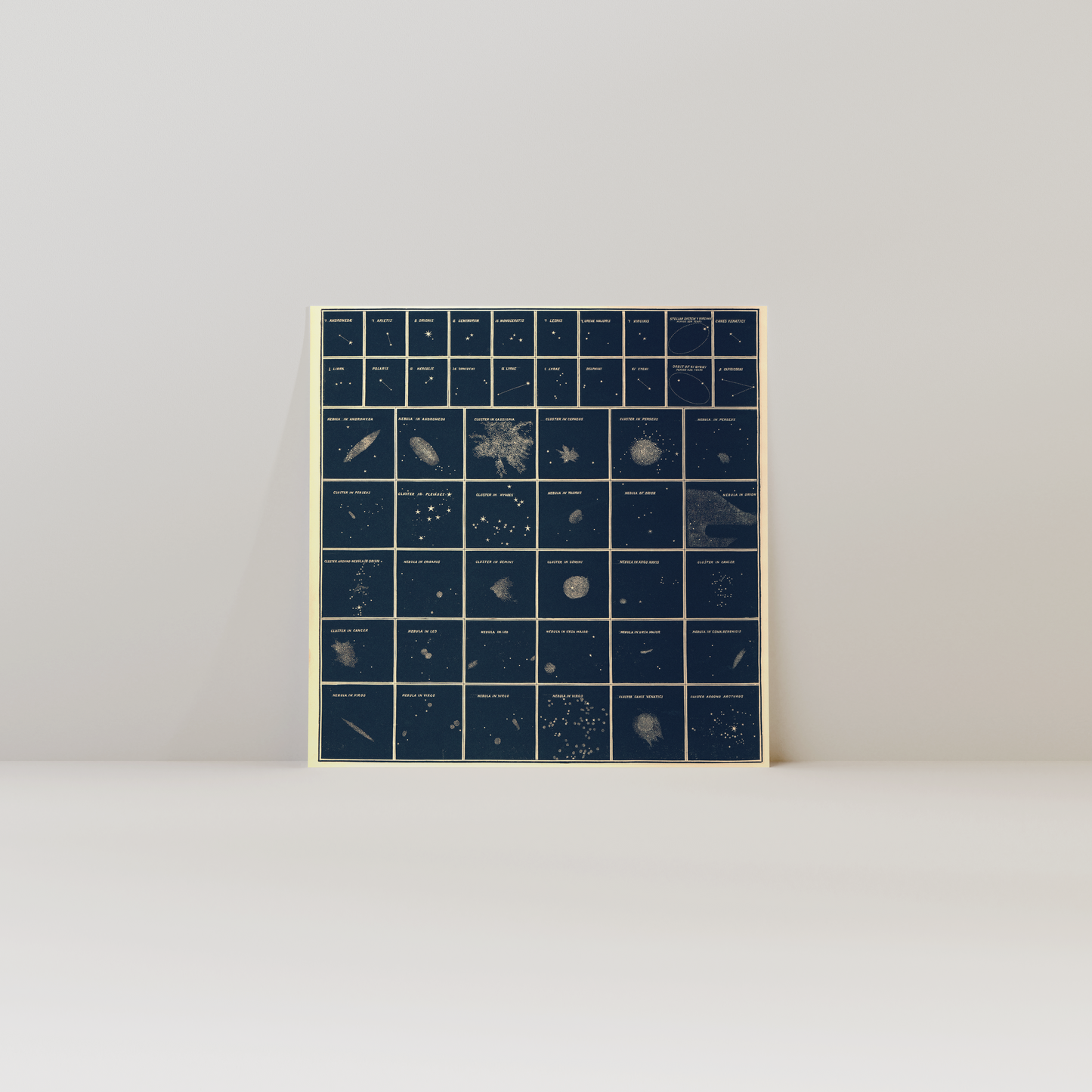
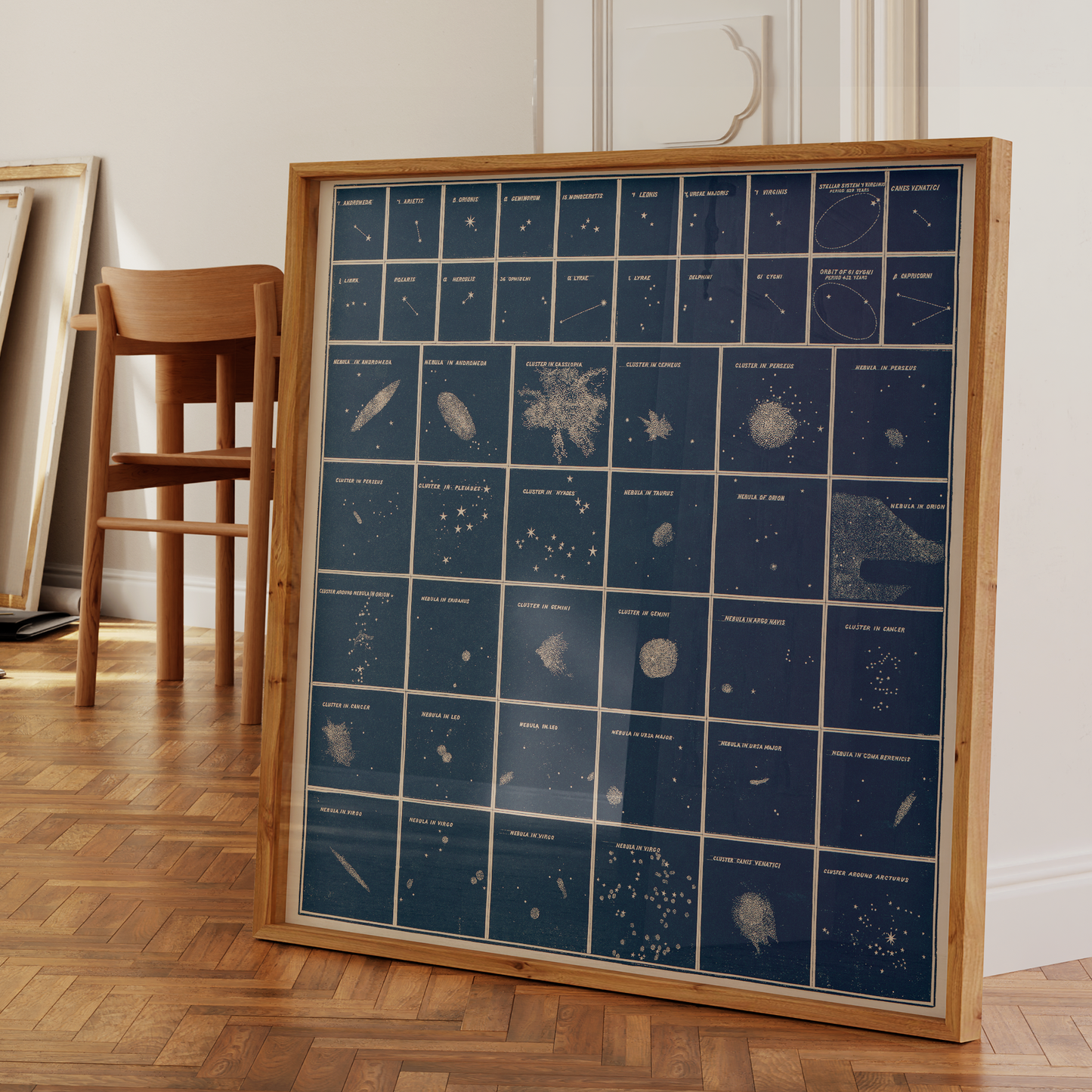
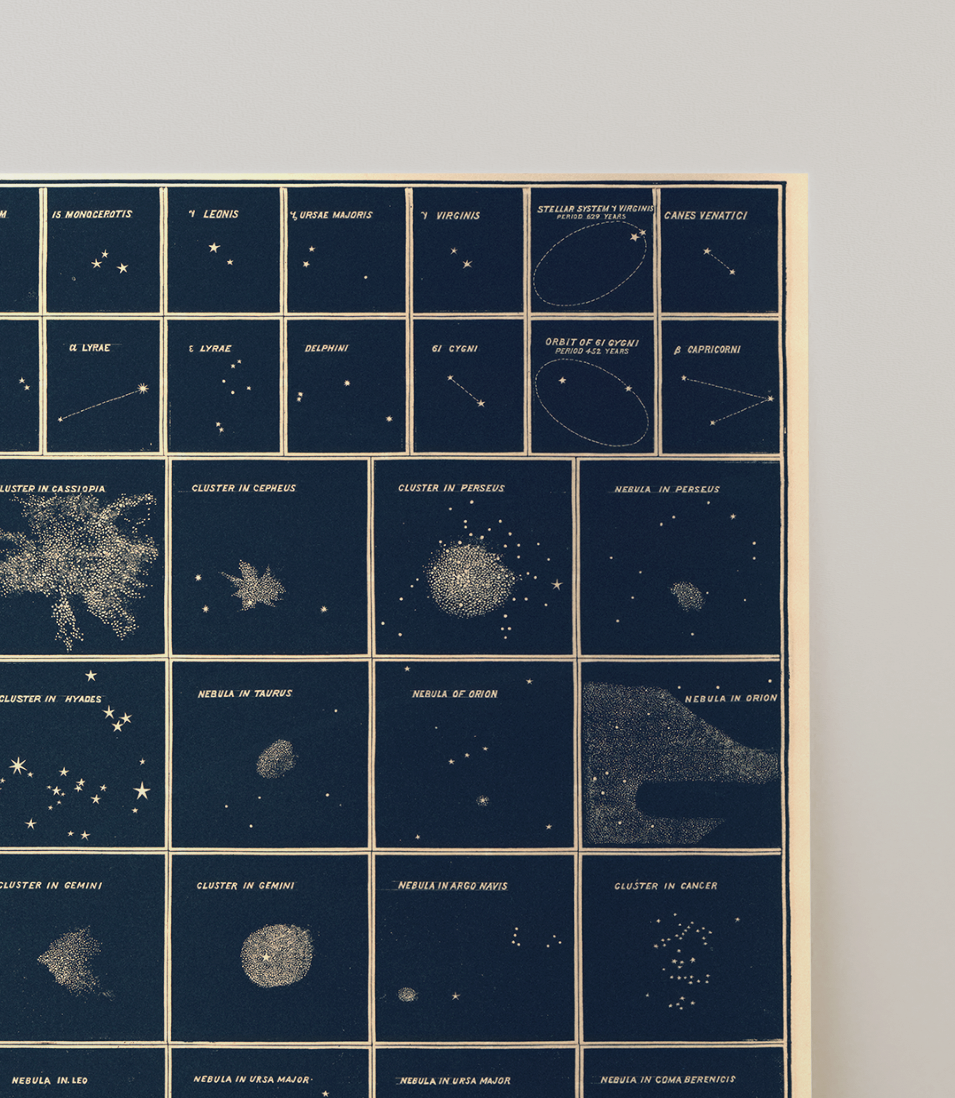
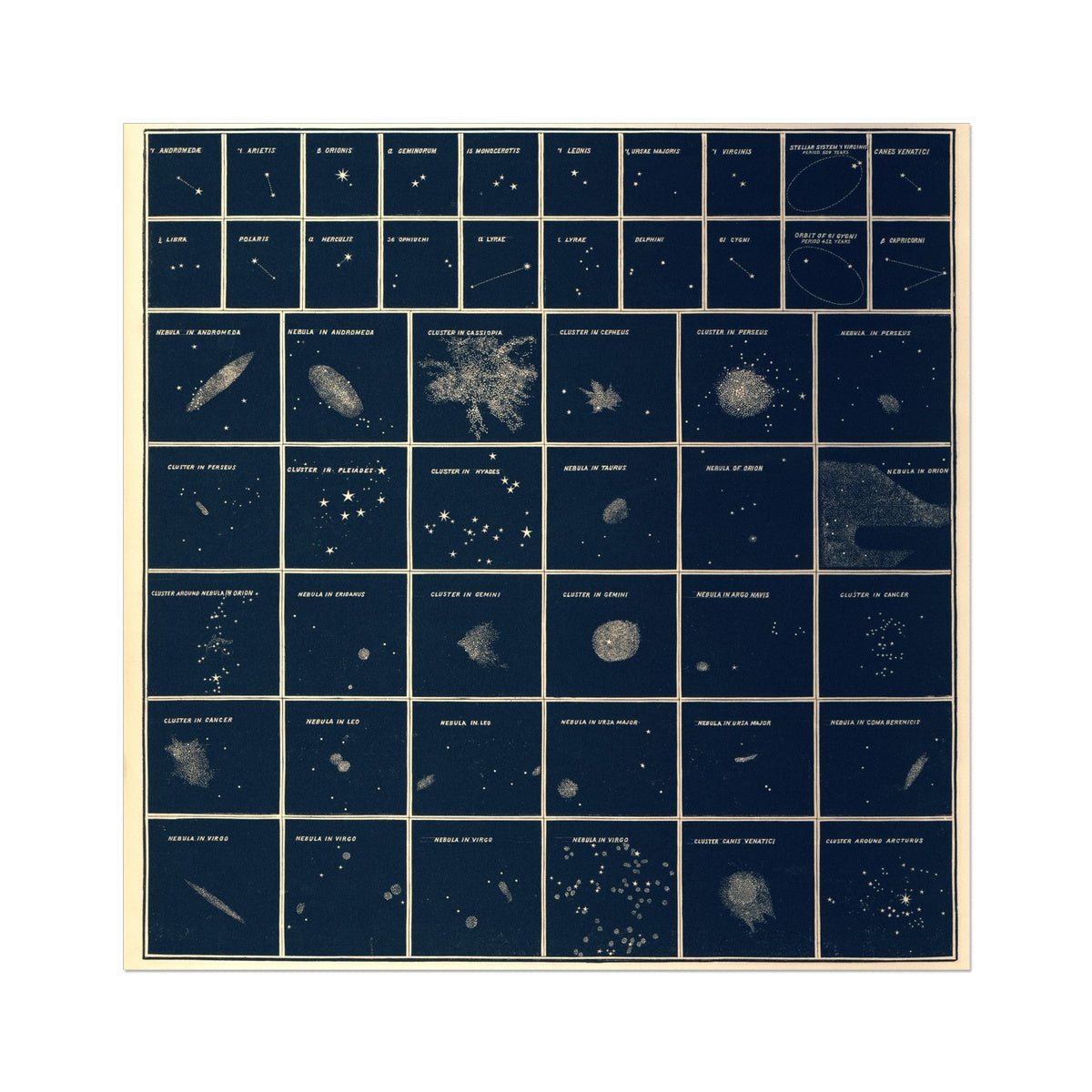
Double Stars and Clusters was published in 1856 in Elijah Burritt’s Atlas Designed to Illustrate the Geography of the Heavens. The chart brings together double stars, star clusters and nebulae, some of the most remarkable objects visible through nineteenth-century telescopes.
Rather than depicting constellations alone, it highlights the richness of the night sky beyond the stars visible to the naked eye. These celestial objects challenged astronomers to measure, classify and understand the structure of the universe.
Both scientifically precise and beautifully engraved, the chart reflects a time when astronomy relied as much on careful observation as on artistic skill.
Restored from the original and reproduced as a museum-quality fine art print.
The Story
The Story
Although largely self-taught, Elijah Burritt became one of the nineteenth century’s most influential popular astronomers. His Atlas Designed to Illustrate the Geography of the Heavens, first published in 1835 and expanded in later editions, introduced thousands of readers to the night sky through clear maps and carefully researched illustrations.
Charts like this one guided observers toward some of the most fascinating telescopic objects. Double stars revealed that many stars exist in gravitational pairs, while star clusters and nebulae hinted at the immense scale and complexity of the universe.
At a time when astronomy was becoming increasingly accessible to amateurs, Burritt’s atlas helped transform the night sky from a collection of familiar constellations into a landscape filled with new worlds to discover.
Editor’s note
Editor’s note
I chose this print because it rewards curiosity.
At first it appears almost abstract. The longer you look, the more structure begins to emerge. Every point, every line and every label represents an object that someone once found, measured and tried to understand.
Restoration
Restoration
This image has been carefully prepared for fine art printing.
Dust, stains, scanning artifacts, and tonal inconsistencies are corrected by hand where needed. The file is then checked for sharpness, tonal range, and print quality.
The goal is not to redesign the original, but to preserve its character while making it suitable for contemporary printing.
Materials
Materials
Printed on Hahnemühle 308 gsm museum-quality fine art paper with a matte finish, or available as a premium 400 gsm canvas mounted in a handcrafted wooden float frame.
Paper prints are shipped unframed and wrapped in acid-free tissue paper.
Shipping
Shipping
All the artwork is printed to order in as little as 2-3 days. We ship everything for free worldwide.
Share

Our artwork is printed on Hahnemühle Fine-Art 308 gsm paper, founded in Germany in 1584 Hahnemühle makes one of the best fine-art paper available today.
Absolutely obsessed with this piece. Very high quality. Owner was very helpful. I can't wait to purchase more prints from here.


Absolutely gorgeous print. I love it!
Extremely beautiful high quality print on nice thick paper. Lovely!
This review has no content.