


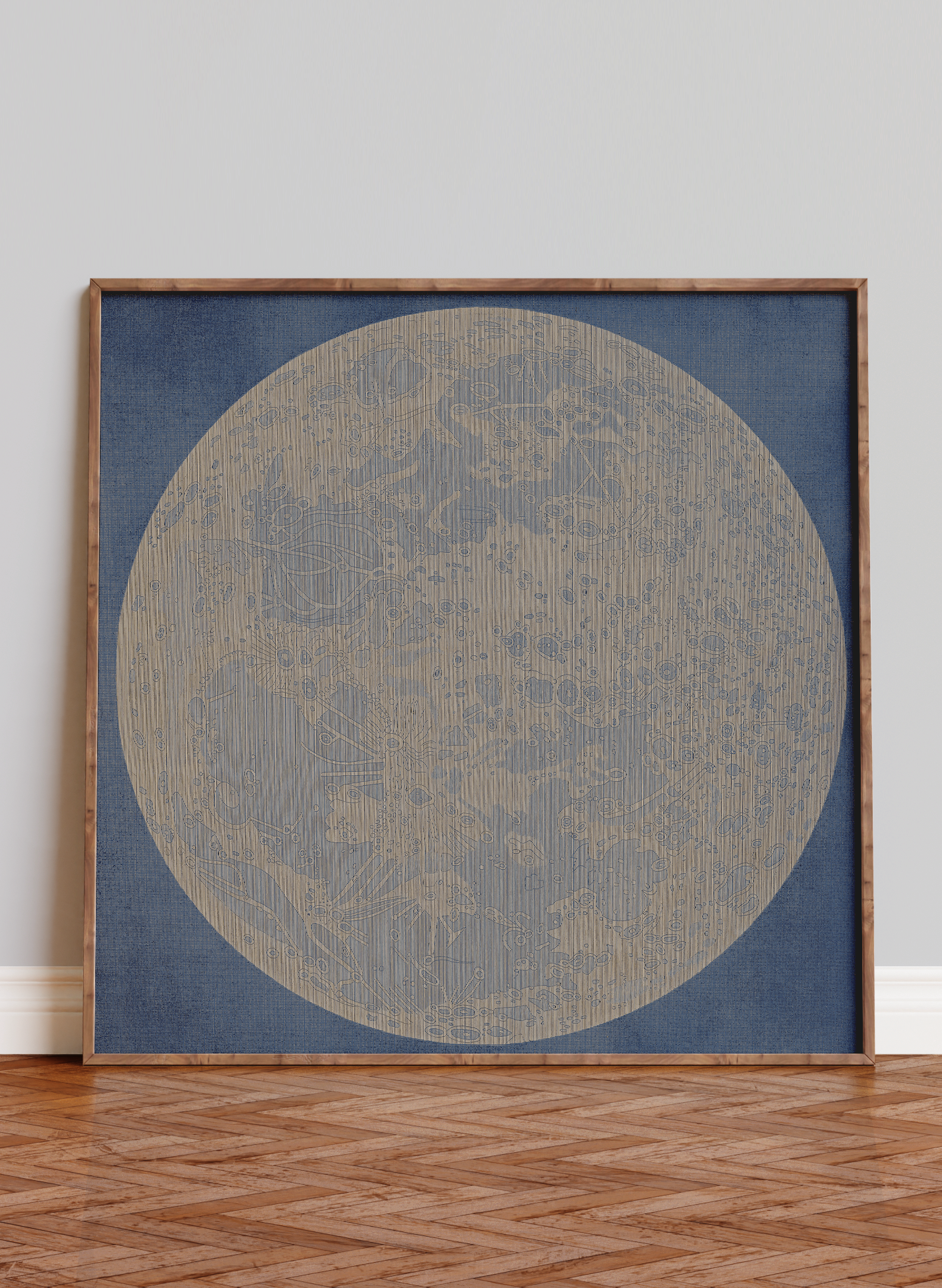
Moon at the Full, 1837
Moon at the Full, 1837
For centuries, the Moon was the only other world we could explore with our eyes.
This engraving belongs to that remarkable period of discovery.
Couldn't load pickup availability
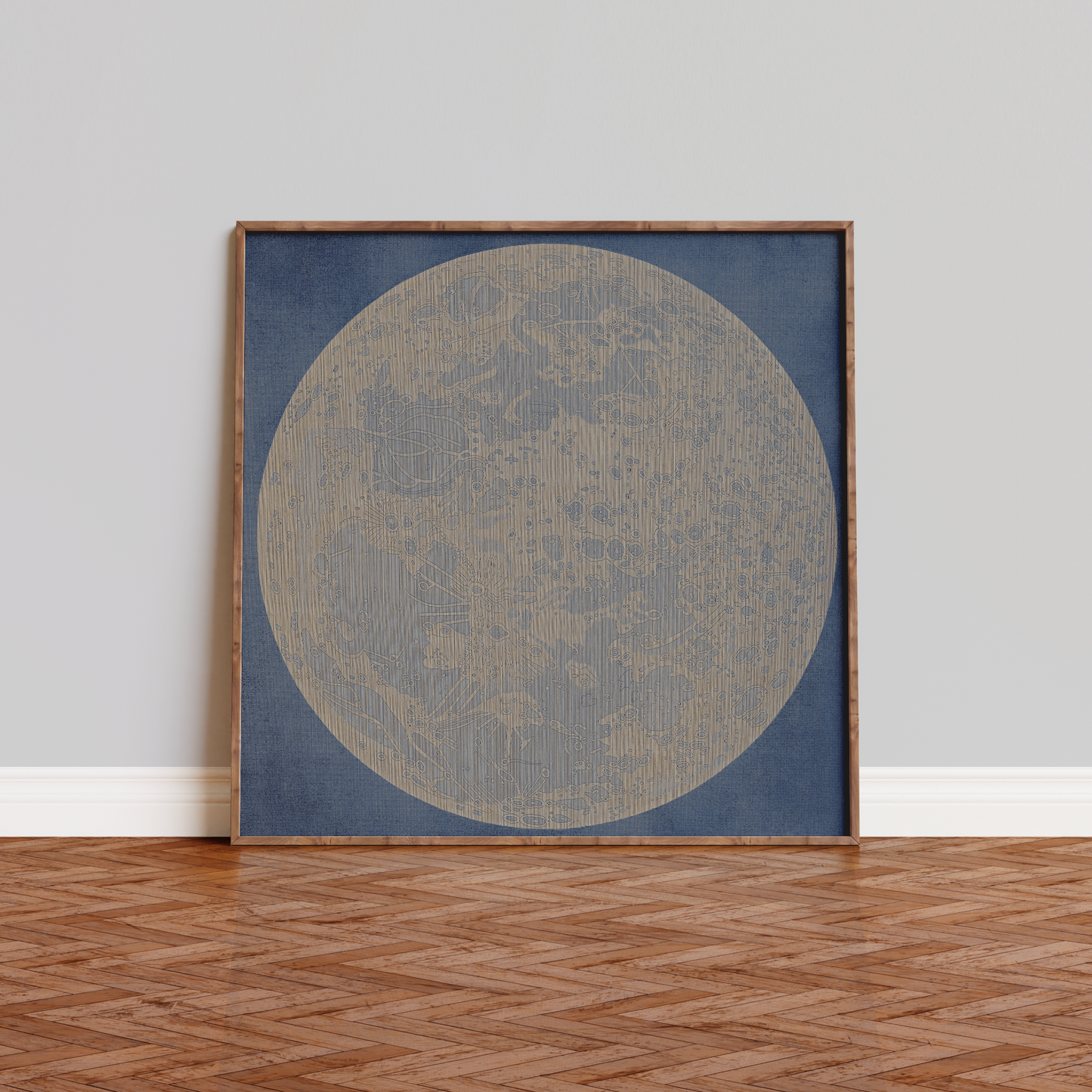
Moon at the Full was published in 1837 as part of Duncan Bradford’s The Wonders of the Heavens. This engraving captures the Moon with remarkable clarity and attention to detail.
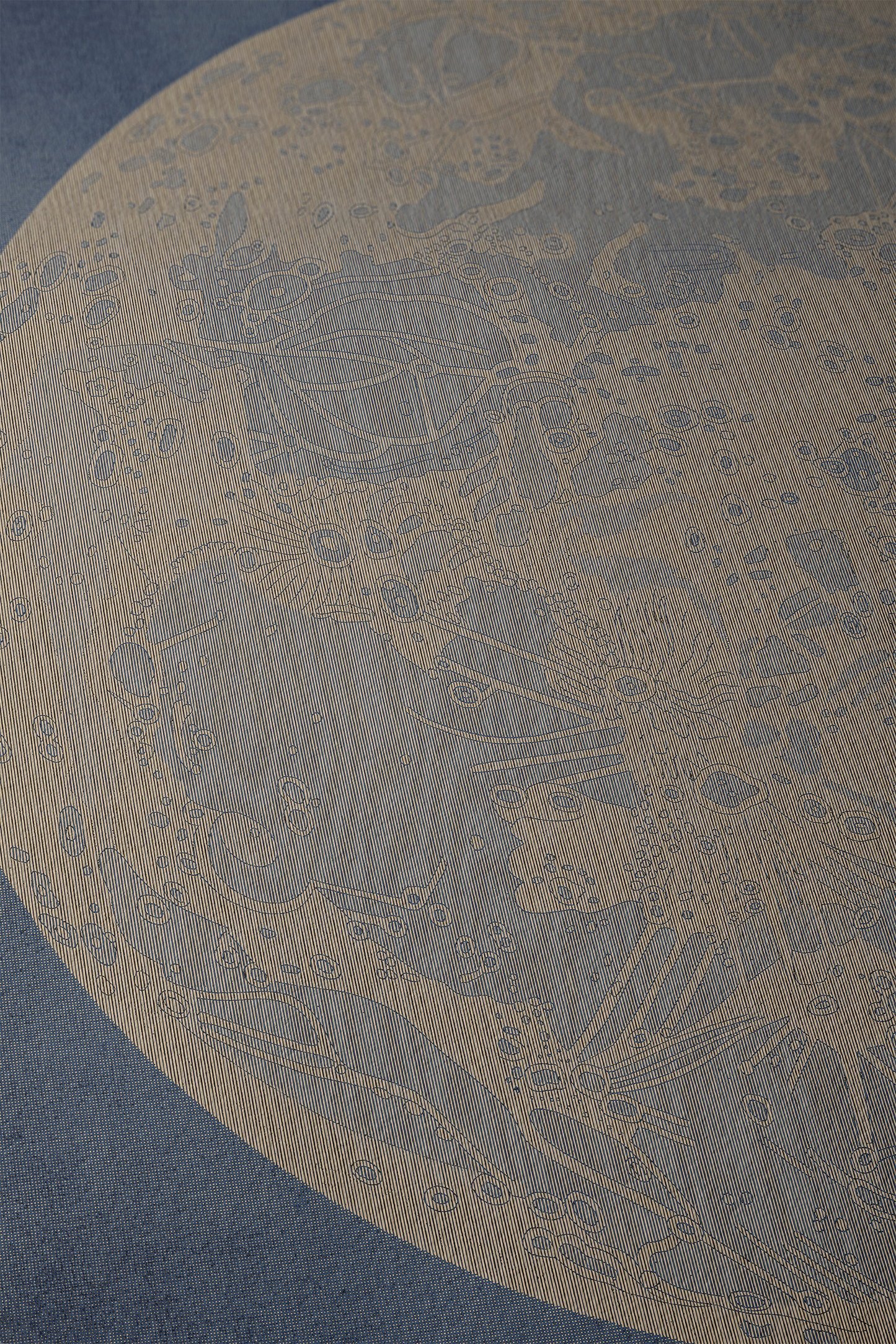
Created decades before photography became a practical tool for astronomy, it reflects a period when the lunar surface was still recorded through careful observation and skilled engraving. Every crater, mountain and shadow was the result of countless hours spent at the eyepiece.
Works like this helped bring astronomy into ordinary homes, making the Moon not just an object of wonder, but a landscape that could be explored with the eye and the imagination.
Restored from the original and reproduced as a museum-quality fine art print.
The Story
The Story
For most of human history, the Moon was the only celestial body whose surface could be studied in detail.
By the nineteenth century, increasingly powerful telescopes allowed astronomers to observe an extraordinary wealth of features: vast dark plains, bright mountain ranges, craters of every size and long systems of rays stretching across the surface.
Before astrophotography, these observations had to be translated by hand. Artists worked closely with astronomers, producing engravings that combined scientific accuracy with exceptional craftsmanship. These illustrations became the standard reference for both scientists and the public.
Published in 1837, The Wonders of the Heavens belongs to this tradition, at a time when astronomy was becoming accessible to a wider audience.
Editor’s note
Editor’s note
I chose this engraving because it invites us to slow down.
Today we are surrounded by photographs from spacecraft and satellites. This image reminds us that understanding once depended on patient observation and the careful work of the human hand.
It is a portrait of the Moon, but also a portrait of curiosity.
Restoration
Restoration
This image has been carefully prepared for fine art printing.
Dust, stains, scanning artifacts, and tonal inconsistencies are corrected by hand where needed. The file is then checked for sharpness, tonal range, and print quality.
The goal is not to redesign the original, but to preserve its character while making it suitable for contemporary printing.
Materials
Materials
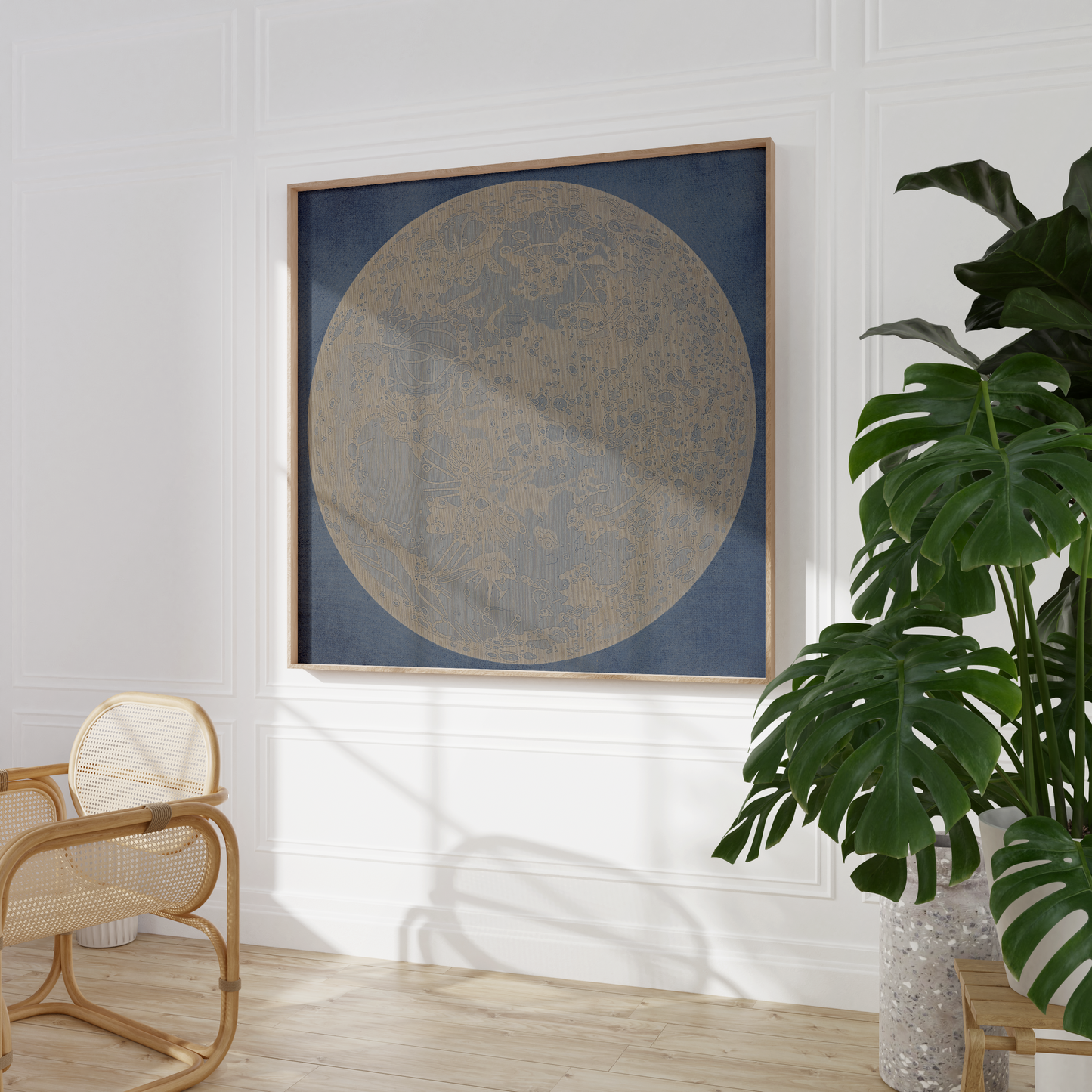
Printed on Hahnemühle 308 gsm museum-quality fine art paper with a matte finish, or available as a premium 400 gsm canvas mounted in a handcrafted wooden float frame.
Paper prints are shipped unframed and wrapped in acid-free tissue paper.
Shipping
Shipping
All the artwork is printed to order in as little as 2-3 days. We ship everything for free worldwide.
Share
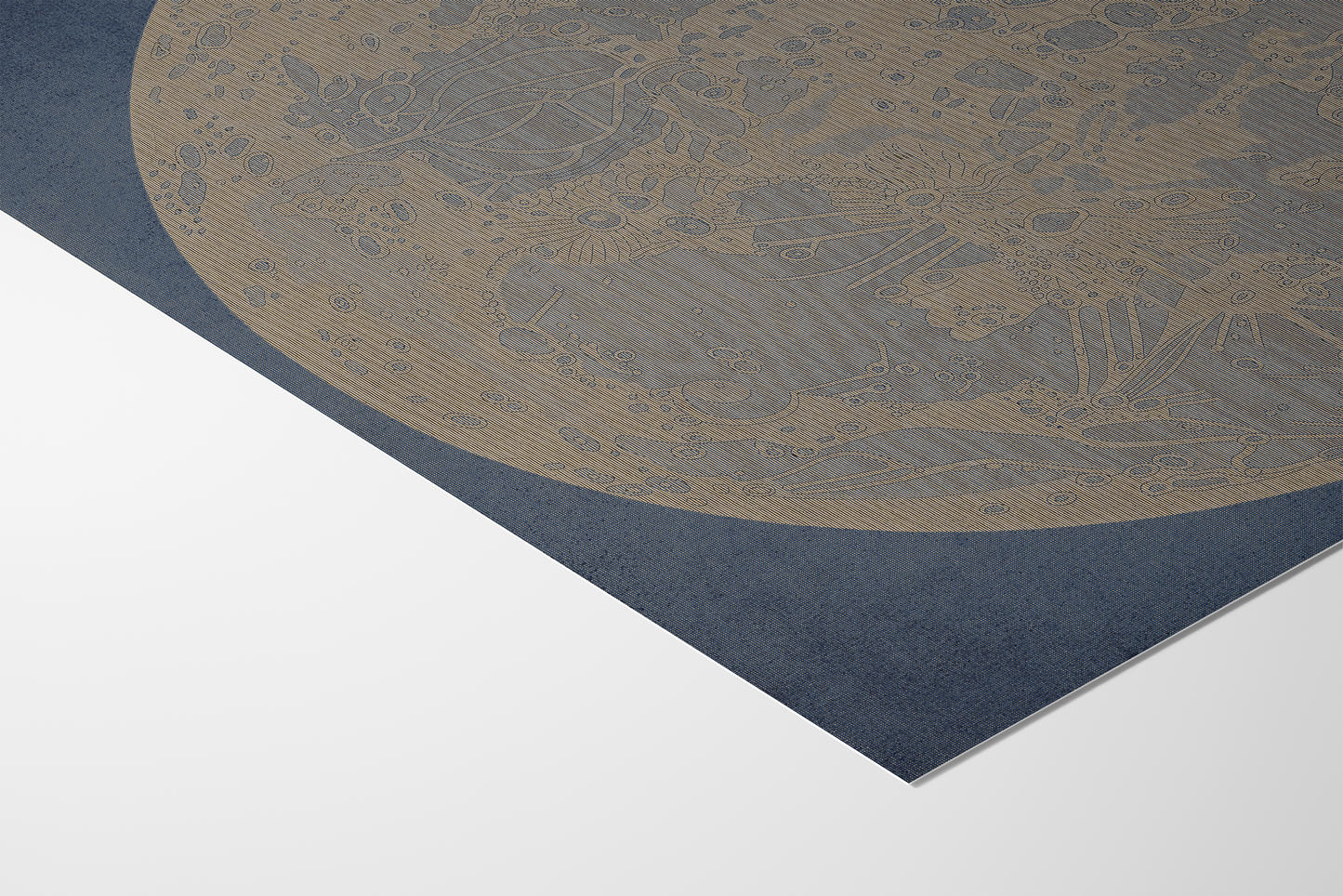

Our artwork is printed on Hahnemühle Fine-Art 308 gsm paper, founded in Germany in 1584 Hahnemühle makes one of the best fine-art paper available today.