
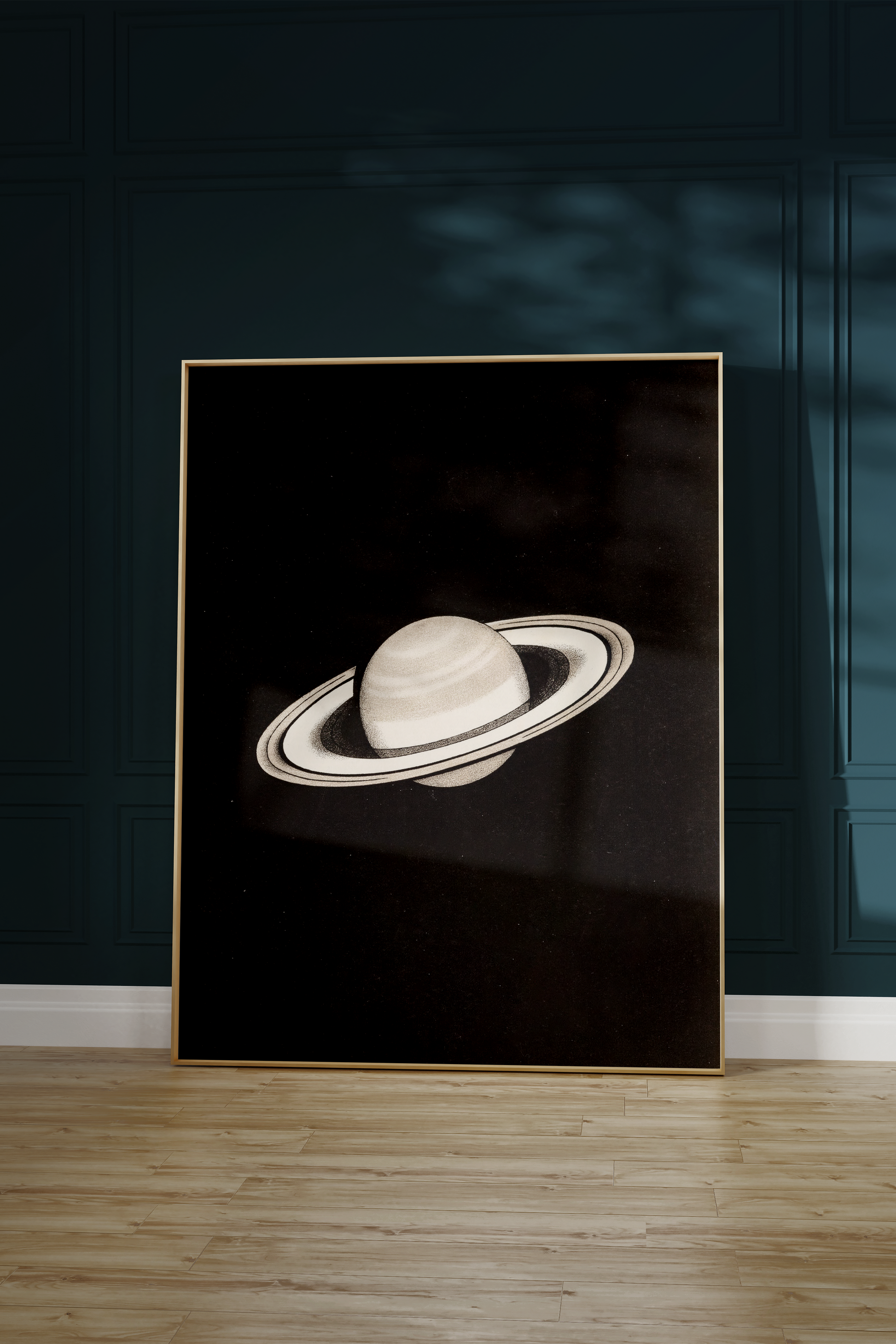
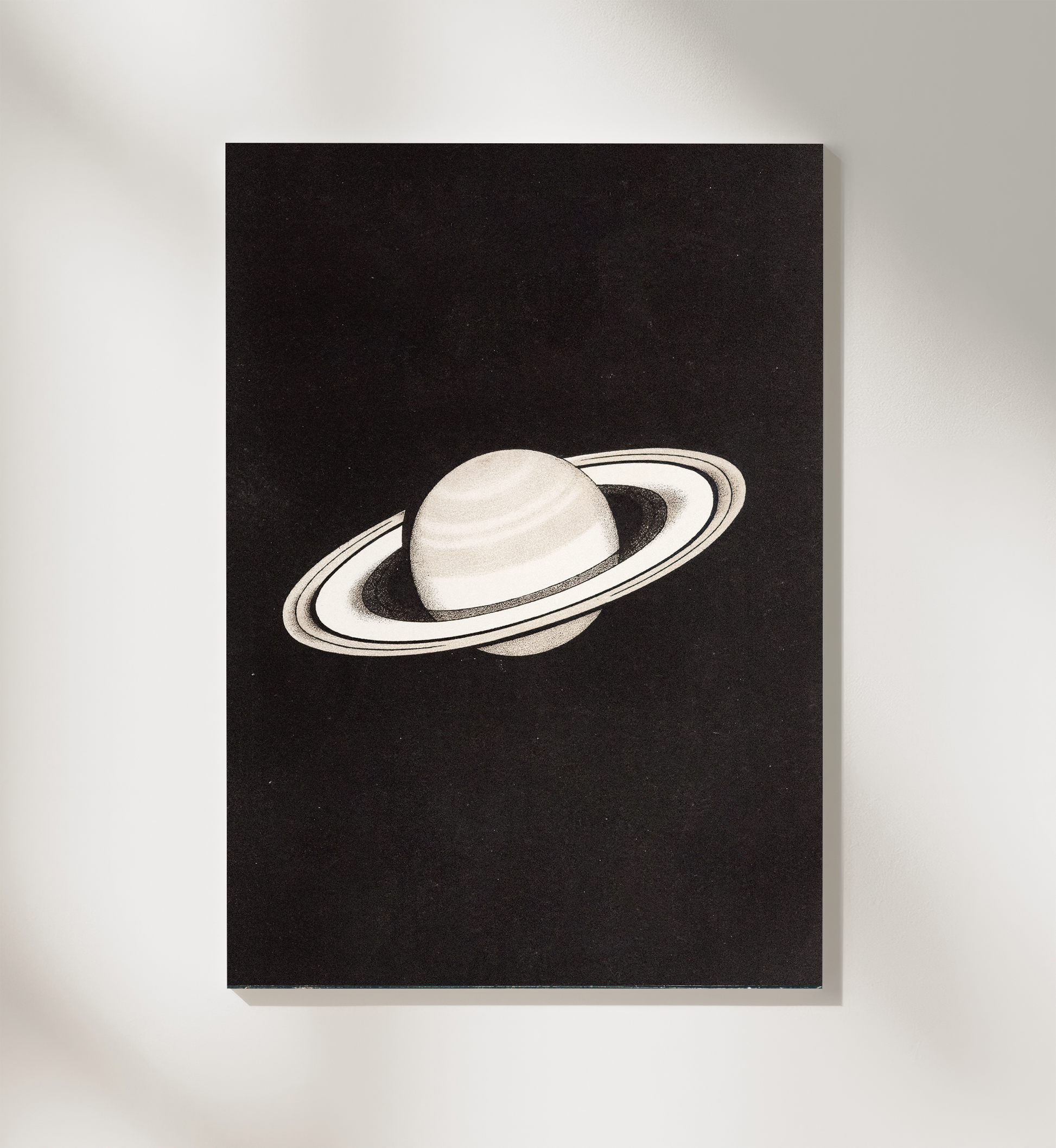
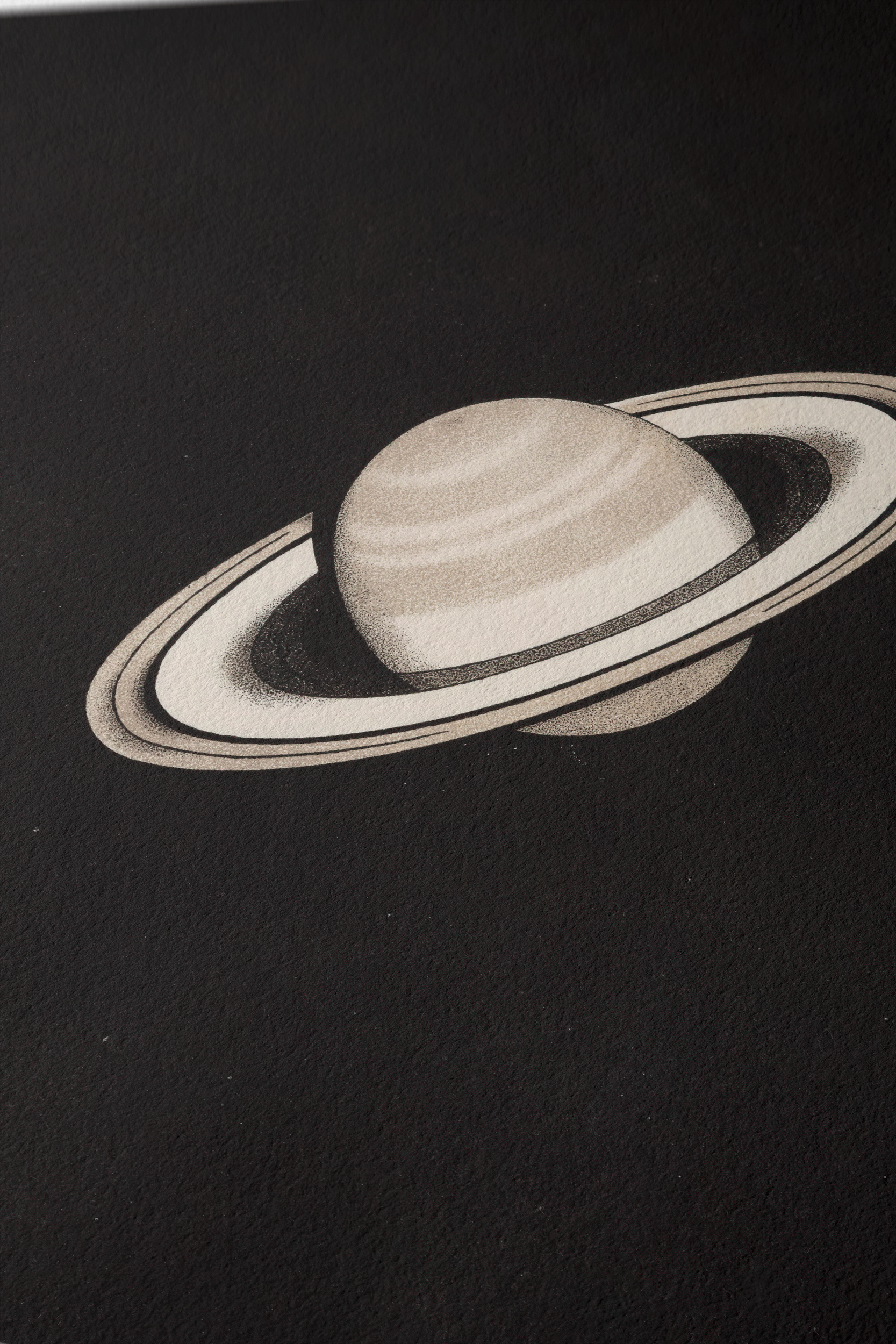
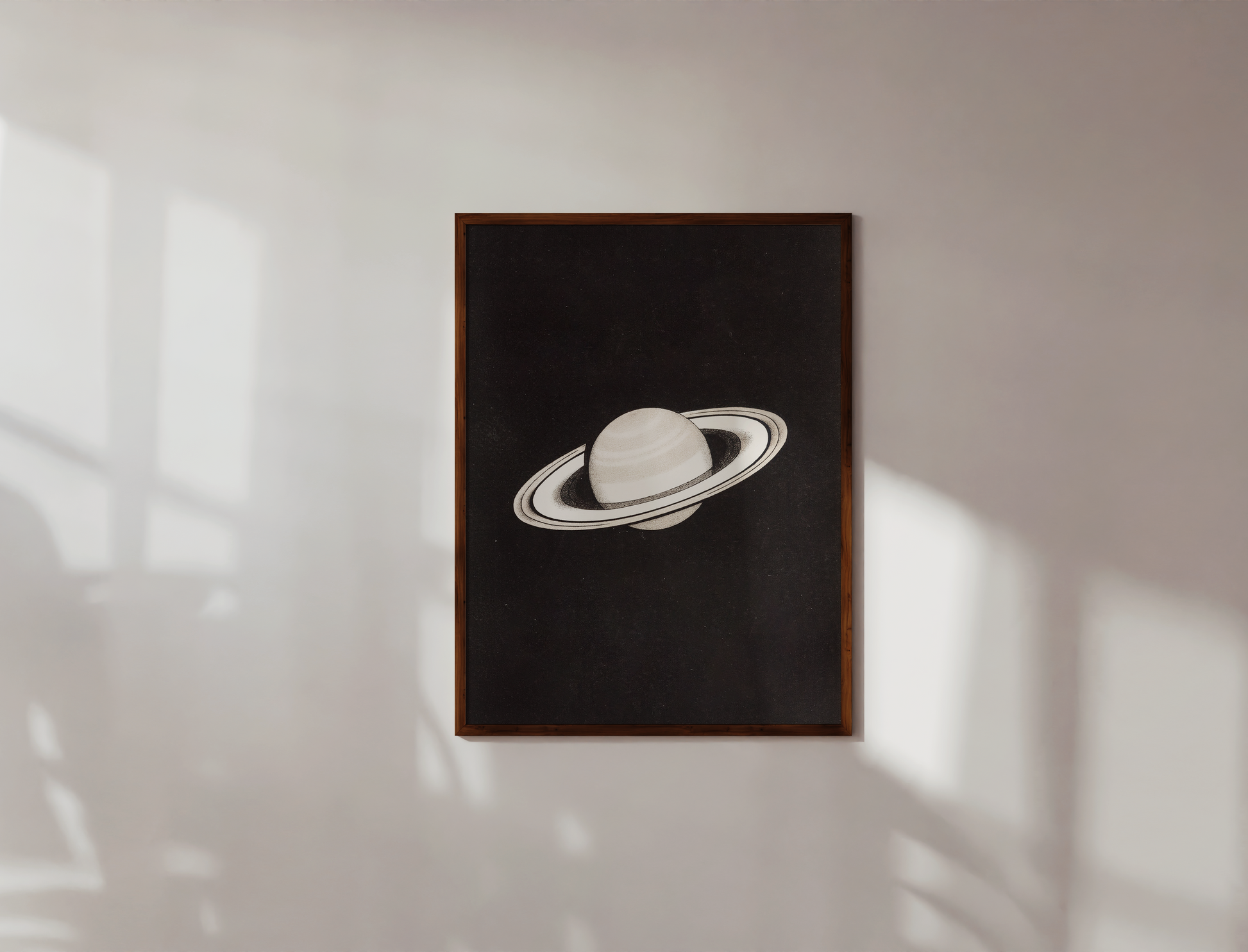
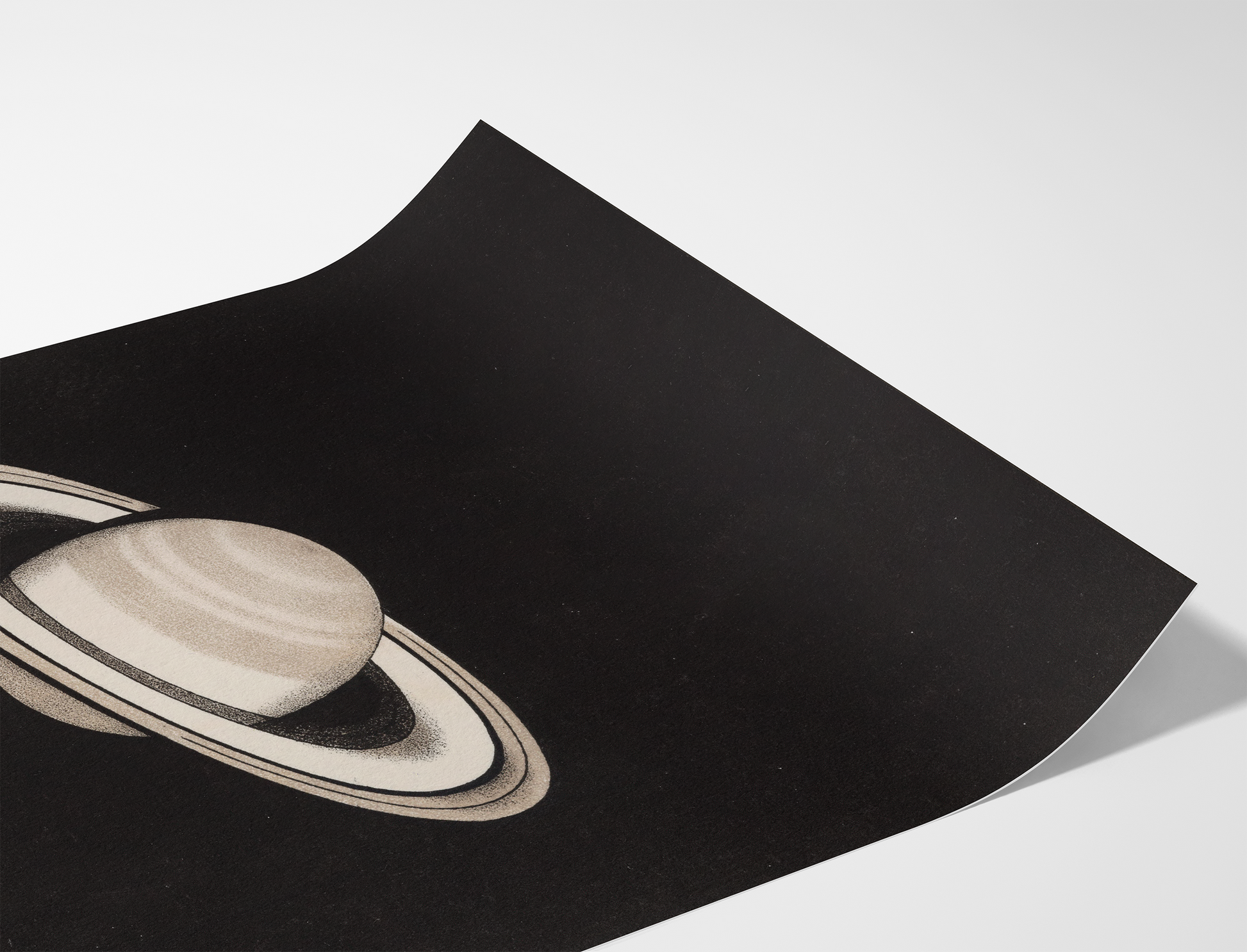
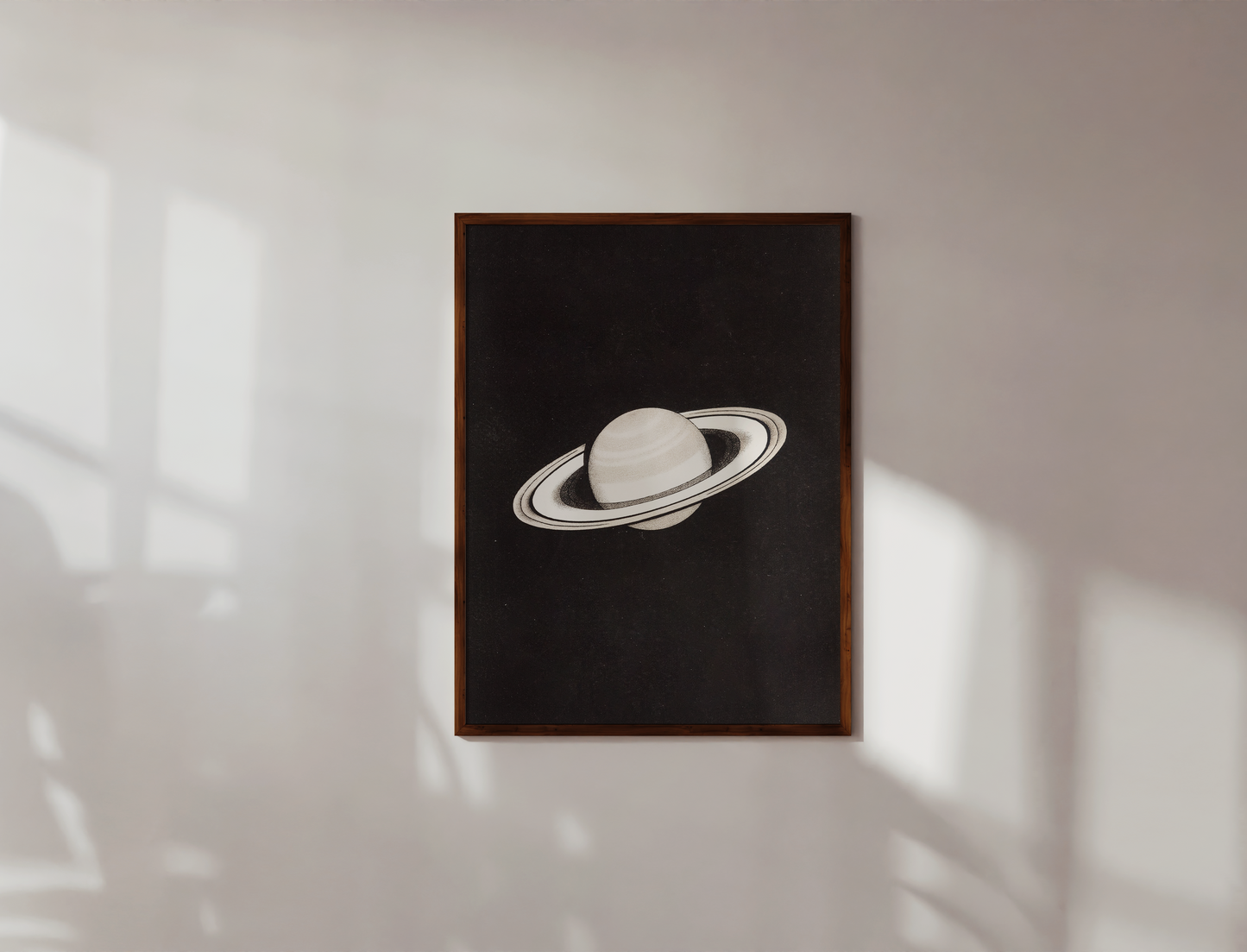
Saturn, 1892
Saturn, 1892
No other planet looks like Saturn.
For generations, its rings challenged astronomers to explain one of the most extraordinary sights in the Solar System.
Couldn't load pickup availability
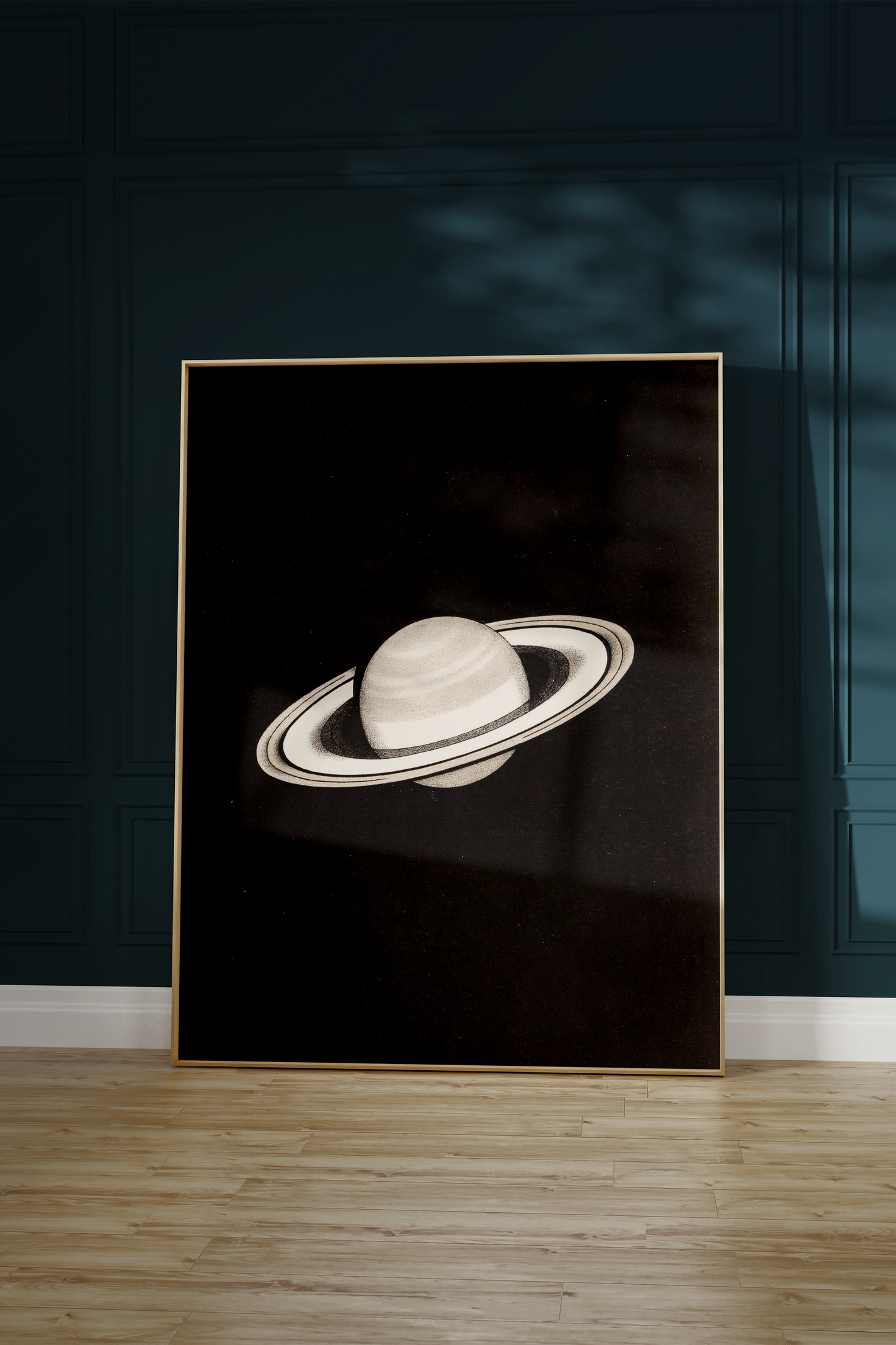
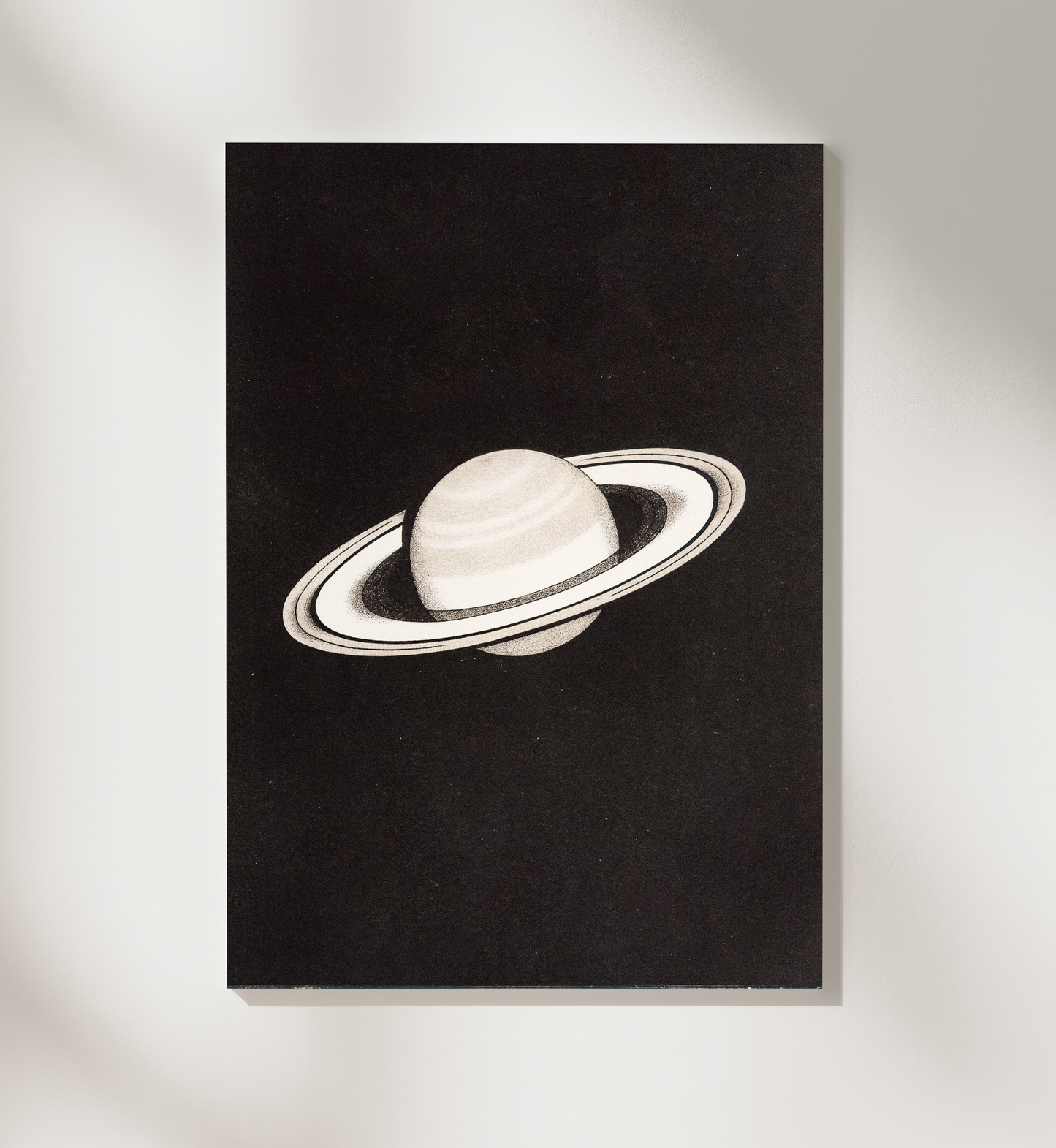
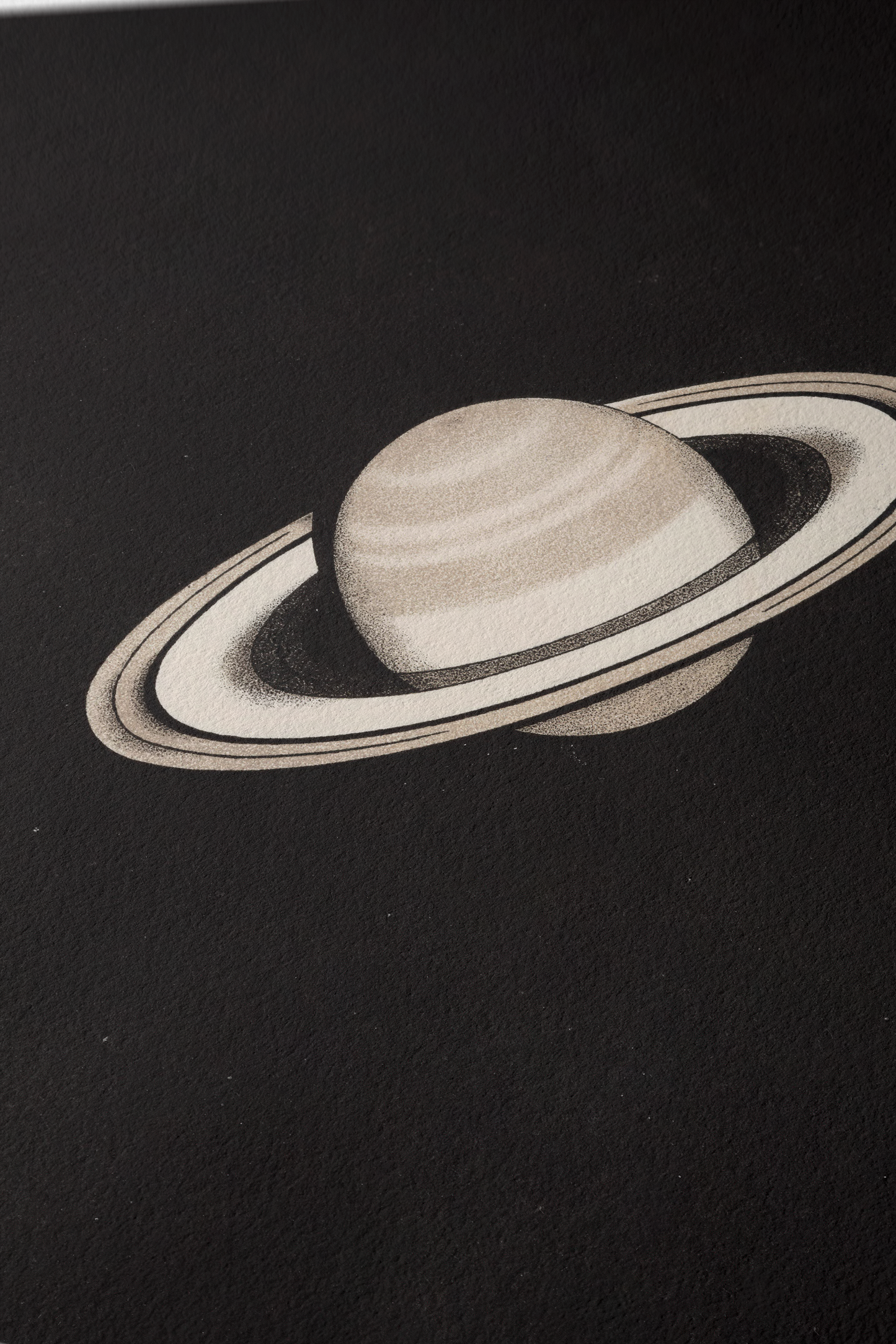
Saturn was published in 1892 in Robert Stawell Ball’s An Atlas of Astronomy. The illustration captures the planet with the elegance and precision that made nineteenth-century astronomical atlases so remarkable.
For centuries, Saturn’s rings were one of astronomy’s greatest mysteries. This image belongs to a period when astronomers had finally begun to understand their true nature, transforming one of the Solar System’s most enduring puzzles into scientific knowledge.
Restored from the original and reproduced as a museum-quality fine art print.
The Story
The Story
Since the invention of the telescope, Saturn has remained one of the most fascinating objects in the night sky.
When Galileo Galilei first observed it in 1610, he could not explain what he was seeing. Through his small telescope, the planet appeared to have mysterious “ears” on either side. It was only later, thanks to improved observations by Christiaan Huygens, that astronomers realised Saturn was surrounded by a vast system of rings.
By the late nineteenth century, when this illustration was published, astronomers understood that the rings were not solid structures but countless small particles orbiting the planet together. The atlas by Robert Stawell Ball helped communicate these discoveries to a wider audience through clear, carefully executed illustrations that combined scientific accuracy with visual elegance.
Today we know that Saturn’s rings extend more than 280,000 kilometres, yet are astonishingly thin, measuring only a few tens of metres in thickness.
Editor’s note
Editor’s note
Saturn has always felt different to me.
Here there are no explosions, no eclipses, no impossible perspectives. Just a quiet portrait of one of the most extraordinary planets in the Solar System.
Restoration
Restoration
This image has been carefully prepared for fine art printing.
Dust, stains, scanning artifacts, and tonal inconsistencies are corrected by hand where needed. The file is then checked for sharpness, tonal range, and print quality.
The goal is not to redesign the original, but to preserve its character while making it suitable for contemporary printing.
Materials
Materials
Printed on Hahnemühle 308 gsm museum-quality fine art paper with a matte finish, or available as a premium 400 gsm canvas mounted in a handcrafted wooden float frame.
Paper prints are shipped unframed and wrapped in acid-free tissue paper.
Shipping
Shipping
All the artwork is printed to order in as little as 2-3 days. We ship everything for free worldwide.
Share
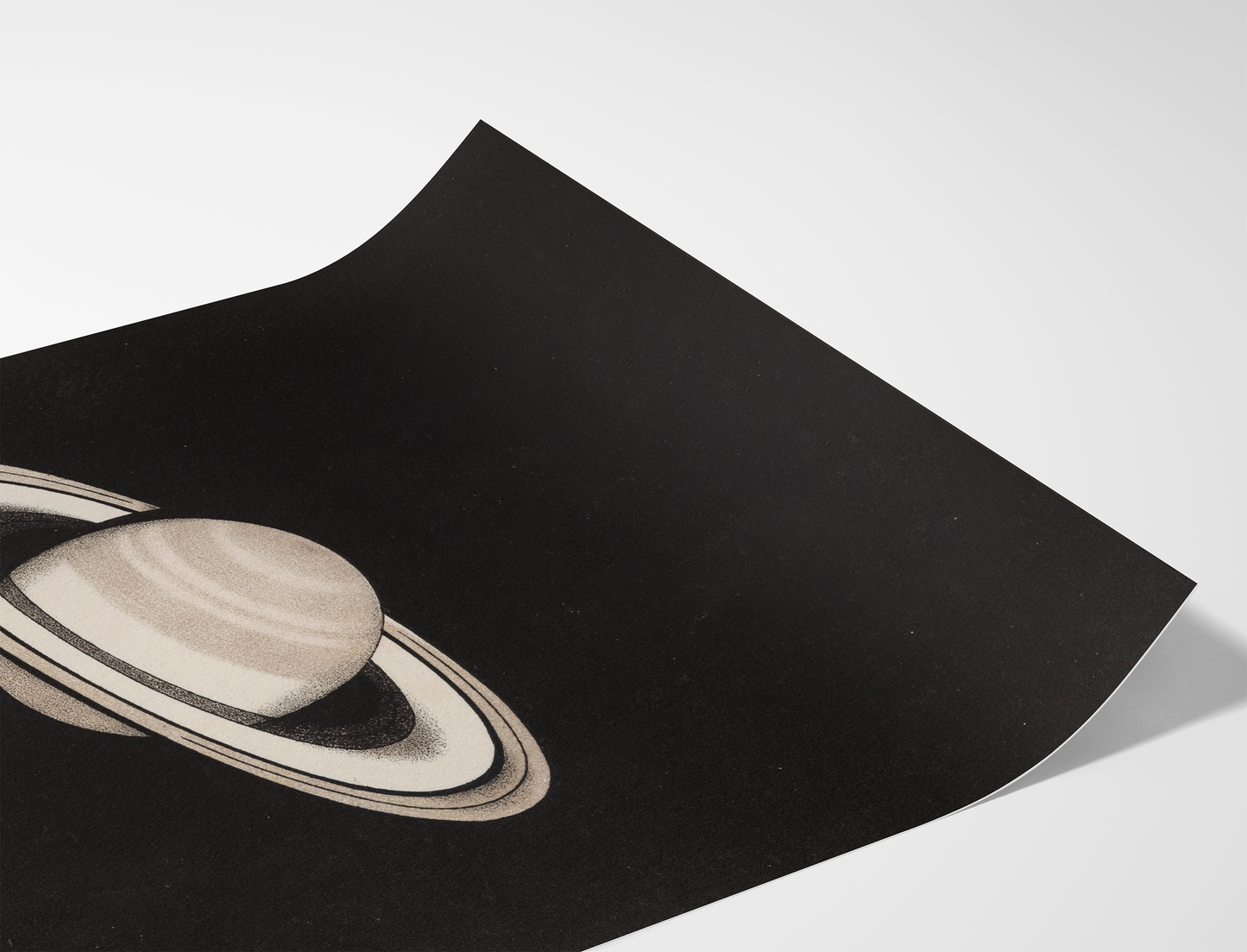

Our artwork is printed on Hahnemühle Fine-Art 308 gsm paper, founded in Germany in 1584 Hahnemühle makes one of the best fine-art paper available today.